
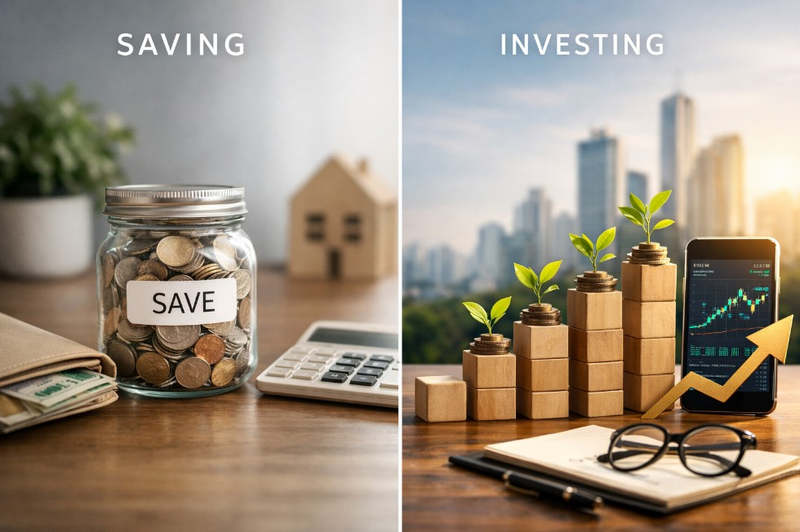
Many people view a traditional bank account as a secure place for their money, but it often performs poorly against rising costs. While holding cash provides a sense of safety, the persistent nature of inflation means that a specific sum today will buy far fewer goods in the future. Deciding between a simple deposit and a market-based strategy determines how your wealth actually functions.
Balancing Liquidity and Growth
Saving involves keeping funds accessible for upcoming expenses or sudden financial shocks. This approach offers immediate availability and ensures the initial balance stays exactly where you left it. Current economic figures show that even with modern accounts paying between 4% and 5%, the real purchasing power barely keeps up with the price of essential services. View saving as a necessary baseline for stability rather than a way to accumulate long-term wealth.
Effective money management requires a sensible split between accessible cash and more productive assets. Cash is great if you need access to it for emergencies or even for leisure, such as exploring different digital entertainment platforms like 1xBet to review the latest competitive sports data. However, while a standard savings account remains entirely predictable, it usually fails to provide the significant expansion needed to combat the cost of living over several decades.
Growth requires moving past the comfort of a guaranteed balance to find better yields:
- Broad market indexes like the S&P 500 have historically delivered around 10% annually.
- Consistent monthly contributions benefit from compounding that builds momentum over thirty years.
- Stock ownership allows for dividend payments that far exceed the interest rates found at local banks.
Why Inflation is a Silent Cost
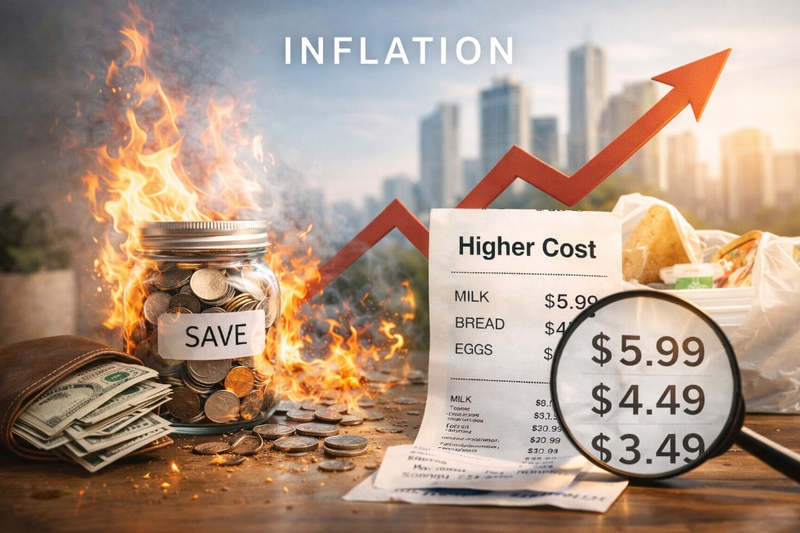
Cash that remains inactive for years eventually loses its fundamental utility. If a person kept $10,000 in a physical safe in 1990, that specific amount would possess roughly half of its initial buying power today. This represents a massive decline in value for an individual who made no mistakes other than waiting. Professional analysts using the CPI inflation calculator often compare cash to an ice cube that slowly melts in your hand. You need it for immediate use, but it cannot serve as a permanent foundation.
The equity market brings a level of price movement that often unnerves new participants. Values fluctuate constantly which can create a false sense of danger. Statistics indicate that the probability of total loss in a broad index fund is remarkably low compared to the absolute certainty that inflation will erode a stagnant bank balance. One path involves a volatile journey toward a goal; the other is a calm descent into a lower standard of living. Which outcome would you prefer?
Building a sustainable financial base depends on a few specific routines that connect these two strategies:
- Set up a recurring transfer from a payroll account directly into a diversified brokerage.
- Keep a liquid reserve of several months of expenses to avoid selling assets when prices drop.
- Opt for automatic reinvestment of all earnings to accelerate the total growth of the portfolio.
Overcoming the Hesitation to Start

Anxiety prevents more wealth creation than any market downturn ever could. Many people stay on the sidelines because they imagine the stock market is a high-stakes game for specialists only. This belief is a very expensive error. Smartphone applications now allow anyone with a small amount of capital to buy shares in the largest global corporations instantly. Delaying your entry while waiting for a better moment is a common mistake.
The total duration of your participation matters more than the specific day you buy in. An individual who starts with small sums at twenty-five frequently ends up with a larger net worth than someone starting at forty-five with five times the capital. Math responds to time more than it responds to effort. You cannot bargain with the loss of twenty years.
Investing forces a person to stop acting like a buyer and start acting like an owner. Owners take a share of the productivity and profit generated by the economy. Buyers simply exchange their time for items that depreciate. Choosing to participate in the market suggests you expect the global economy to keep moving forward. It is a practical decision supported by a century of data.
Review these points before you decide where to put your next paycheck:
- Keep cash for your short-term needs and use stocks for your long-term goals.
- High-inflation cycles turn a basic savings account into a losing calculation.
- Occasional market drops are simply the price of achieving higher returns over time.
Does your current financial plan offer real growth or just the appearance of safety? True independence comes from building a collection of assets that produce value independently. Stop watching the value of your cash fade away and start building for later.