

Technology is inescapable. You encounter it at work, in communication, and in the way we solve problems. As a result, most parents want their children to be comfortable around technology and confident using it.
But there’s a problem. Parents often take that interest and try to turn it into a goal or something to measure. Even worse, some try to make it an obligation. That pressure will kill their drive and desire.
If your child is interested in technology, your job isn’t to enforce, it’s to encourage the conditions for their interest to develop naturally.
With this article, we’ll show you how to do exactly that.
Start With Curiosity, Not Career Paths
One of the quickest ways to shut down a child is to connect technology to future success too soon. Using statements such as “this will be useful for your future job” or “tech skills will build your future” may be accurate, but they take away from the actual learning and achievement.
Children don’t need a reason to be curious. They just need the opportunity.
Instead of framing technology as something they should learn, present it as something they can explore. Ask open-ended questions:
- What do you think makes this game work?
- How do you think apps know what you like?
- What would you build if you could make anything?
These questions stimulate independent thought instead of narrow learning. For children, that’s a world of difference.
Frame Technology as a Path to Creative Expression
For many kids, technology equates to consumption, which is to say, videos, games, shopping, and reading. That’s not the kid’s problem; it’s the default point of most devices.
Your responsibility as a parent is not to deny your kids access to screens, but to add to the possibilities those screens offer. Show technology as a tool:
- Creating animations, stories, or simple games
- Solving puzzles or logical challenges
- Creating things that did not exist before
Once kids experience technology as an expressive tool rather than as a means for passive consumption, their relationship with it changes. No longer are they simply users of the technology; now they are creatives.
No need to preach about STEM or coding literacy; just let them have the pleasure of creating something that responds to their ideas.
Follow Their Natural Pace Over a Curriculum Timeline

Parents often think that their child is behind because they’re not interested at the same age as others. That is a pointless comparison.
Interest in technology is rarely linear. Some kids show early fascination, then drift away. Others ignore it completely and suddenly dive deep years later. Both paths are acceptable.
What matters is availability, not insistence.
Having optional, well-structured resources available without deadlines or pressure allows children to engage when they are ready. For families who educate at home and prefer flexible learning or structured but low-pressure options, homeschool courses can provide exposure without turning learning into a rigid obligation.
The key is choice. The moment a child feels like it’s mandatory, curiosity shuts down.
Avoid Turning Learning Into Evaluation
Grades, tests, and constant feedback are motivation killers, especially for creative and logical exploration, as shown by research on how children are motivated. Technology thrives on trial and error and taking chances on experimentation. If you frame mistakes as failure, they’ll be less likely to try. Those are lost learning opportunities.
Instead of asking:
- Did you finish it?
- Was it correct?
- How fast did you do it?
Lean toward:
- What did you change?
- What surprised you?
- What would you try differently next time?
That repackages the idea of learning as a process, rather than focusing on performance. Kids who feel secure experimenting are far more likely to stick with technical subjects longer.
Model a Healthy Relationship With Technology
Children don’t just learn from what we say. They emulate our behavior. If we’re only using the technology to deal with work pressure or to scroll endlessly, this is the message we’ll be sending.
Let them see you:
- Googling how something works.
- Using tools to solve practical problems.
- Learning something new online for fun.
You don’t need to be a tech wizard yourself. Just show that you have a thirst for learning and that you see technology as a useful tool, not a means of escape – especially when it comes to using digital tools in everyday family life.
Curiosity is contagious.
Let Play Lead the Way
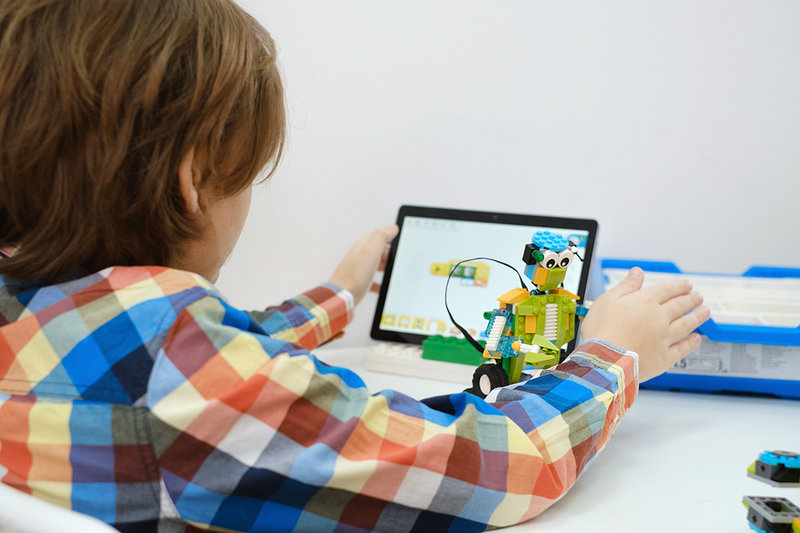
Play is not a distraction. When you know how to use it, play can be one of the most valuable tools for teaching kids about technology, supported by evidence on the value of learning through play. The strongest technical thinkers haven’t been taught to code; they’ve been taught to tinker.
Games that involve logic, strategy, or building are often a gateway. You also have platforms where they can be free to experiment without thinking they are “doing it wrong.”
Games not only introduce fun, but they also lower the stakes. That makes them willing to try more things and opens possibilities.
If a child is engaged, focused, and experimenting, that is learning in its most powerful form.
Try not to “optimize” every activity. Not everything needs to be productive to be worthwhile.
Separate Your Ambitions From Their Interests
This part is uncomfortable, but it is a necessary piece: pressure doesn’t typically come from the child. Instead, it is often the parents and other adults who create pressure.
It is normal to want your child to be independent and capable, but it is not normal to project your fears and aspirations onto their learning process. It’s also counterproductive.
Ask yourself honestly:
- Am I encouraging, or am I steering?
- Would I still be happy if they never pursued this further?
- Am I reacting to their interest or trying to create it?
Children sense expectation even when it’s unspoken. When they feel like you’re pushing them in a direction, it can stifle their curiosity. In some cases, it might lead to outright resistance.
Focus on Skills, Not Labels
You don’t need to raise a coder, an engineer, or a tech kid. These labels create boxes. Skills create freedom.
Technology-related learning naturally builds:
- Logical thinking
- Problem-solving
- Patience and persistence
- Creativity and systems thinking
Once they have the skills, they can transfer to any number of endeavors: art, science, business, and life in general. When parents focus on skill development rather than identity, children feel less pressure to be something and more freedom to explore.
Encourage Questions, Not Mastery
The goal isn’t for your child to master technology early. It’s for them to stay curious about it long enough to grow naturally.
If a child finishes an activity and asks another question, you’ve already won. Interest that grows without pressure lasts longer, goes deeper, and leads further than anything forced ever could.
Make Learning Easier
It’s good to encourage an interest in technology. But strict schedules and constant supervision won’t get you there. It requires restraint, trust, and patience. More like a partnership.
Create access. Offer options. Stay curious alongside them.
And then step back.
Children don’t need to be pushed toward the future. They need space to discover it on their own.