

Family life today doesn’t look like it did ten years ago. Kitchens glow with digital screens, living rooms host voice assistants instead of radios, and even bedtime stories have turned into interactive tablet sessions. This isn’t just change—it’s a complete family journey into a new kind of modern living, where family tech has become both the problem and the solution.
Families used to meet technology with hesitation. Now, they build their routines around it. Parents monitor children’s screen time through apps; grandparents join video dinners; and the home itself—thanks to smart speakers, lights, and thermostats—learns everyone’s habits. It’s no longer about adapting to technology but letting it adapt to us.
Yet, behind this digital comfort lies a constant question: how safe is all this connectivity? With children learning, playing, and socializing online, digital parenting has become less about restriction and more about smart management. Many families now use digital protection tools such as VeePN VPNs, which help safeguard private information and shield online activities from unwanted eyes. A VPN can even allow access to age-appropriate educational content that might otherwise be blocked in certain regions. Privacy, once a side note, has become a core value in digital households.
The Rise of Smart Habits

It starts small. A family replaces paper lists with shared apps. Grocery reminders pop up on everyone’s phones. The morning routine syncs with a smart speaker—weather updates, calendar alerts, the coffee machine warming up exactly on time. Over 68% of households in developed countries now own at least one smart home device, according to Statista.
This shift isn’t about gadgets; it’s about smart habits. Devices become meaningful only when they save time or reduce stress. Families that once spent twenty minutes searching for lost keys now rely on trackers. Parents use apps to schedule homework and free time in balance. Even children develop early planning skills by observing how tech can organize their world.
And somewhere in this sea of innovation, there’s still room for family connection. Weekly “tech-free nights” are becoming popular again—ironically, organized through calendar notifications. A paradox, but a productive one. Families learn to manage technology, not be managed by it.
At this point, even a simple VPN can play a role. Once again, we’ll come to understand the importance of tools like VeePN VPN. While parents ensure internet safety for children, it also helps maintain balanced digital exposure—no aggressive advertising, no location tracking, just calm, focused access to what truly matters.
The New Meaning of Digital Parenting
Parenting in the 21st century is not just about teaching manners—it’s about teaching media literacy. Children now grow up surrounded by screens, and digital parenting means guiding them through that environment without fear. According to a 2024 global family tech survey, 74% of parents believe technology has improved their relationships with their children, primarily through shared learning experiences and communication tools.
Parents no longer just set screen limits; they co-watch, co-play, and co-learn. Families explore coding games, build digital photo albums, or even create short films together. This joint participation turns technology into a shared language—a bridge, not a barrier.
However, challenges persist. Notifications, endless scrolling, and digital fatigue can easily overwhelm. That’s where the concept of lifestyle innovation steps in—using digital tools mindfully, creating balance, and choosing purpose over distraction. It’s not about going offline; it’s about choosing when to connect and when to pause.
When Innovation Becomes Lifestyle
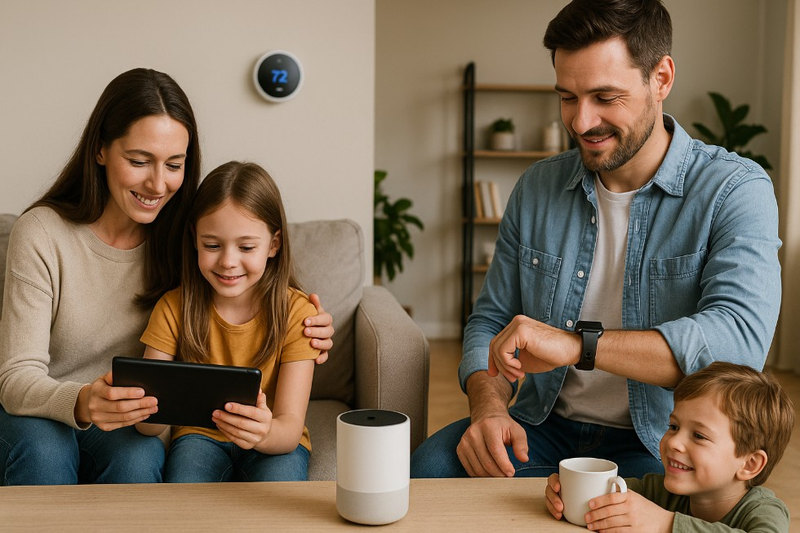
Technology no longer exists outside family life—it lives within it. Modern living is a blend of convenience and consciousness. Smart thermostats save energy; wearable devices track health and suggest better sleep patterns; AI-driven grocery apps cut waste by predicting what you’ll actually use.
Families reinvent their daily flow with these tools. For instance, one study found that households using smart scheduling assistants reported a 22% decrease in missed appointments and a 17% improvement in daily mood ratings. These are not futuristic predictions but real transformations already unfolding in homes worldwide.
At the heart of it all lies intention. Families who embrace family tech with mindfulness see it as a partner rather than a threat. They don’t adopt every new device—they choose those that make life easier, more efficient, or more connected.
Lessons from Our Unexpected Journey
This “reboot” of family life didn’t come from a plan. It came from necessity—remote work, online schooling, digital entertainment becoming lifelines rather than luxuries. Yet through this process, families discovered new forms of togetherness.
Smart habits replaced chaos. A shared cloud replaced the kitchen bulletin board. Digital parenting replaced guesswork with awareness. And though the screens multiplied, so did shared laughter, learning moments, and collaboration.
Technology, when guided by intention and privacy, redefines the meaning of home. A modern family doesn’t just live together—they live connected, intelligently and securely.
In the end, family tech is not about gadgets. It’s about values. The family journey is no longer linear—it’s layered, data-driven, emotional, and adaptive. What began as an unexpected challenge turned into a powerful evolution, where smart habits and digital awareness reshaped how we love, live, and grow together.
The reboot wasn’t just digital. It was deeply human.