
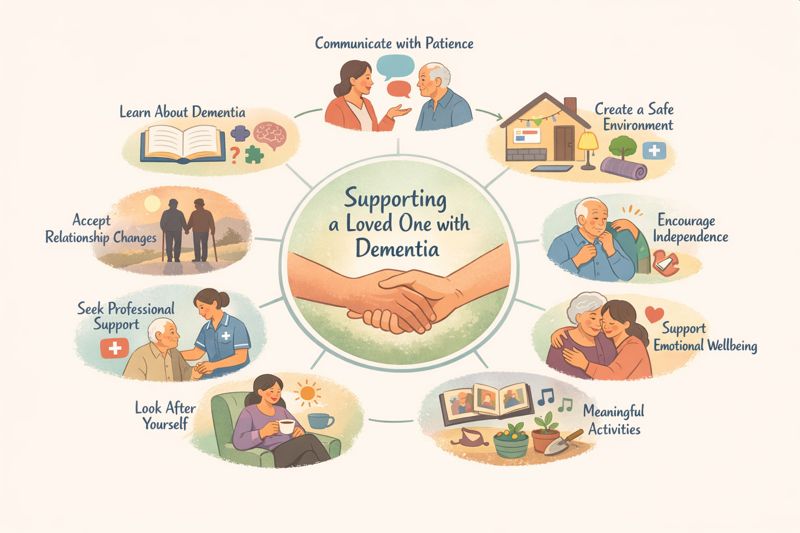
Supporting a loved one living with dementia can feel overwhelming at times. The condition affects not only memory, but also communication, behaviour, and everyday independence. While no two people experience dementia in the same way, what remains constant is the need for patience, understanding, and consistent emotional support.
The good news is that there are many practical steps you can take to make daily life easier and more meaningful for both you and the person you care for. Taking the right approach means that you can help maintain their dignity, comfort, and sense of connection.
Let’s take a closer look at these steps and what they involve.
1) Learn About Dementia and What to Expect
One of the most helpful things you can do is educate yourself about dementia. Understanding how the condition progresses helps you respond more calmly and realistically to changes in behaviour or abilities.
Dementia is not just about memory loss. It can also affect:
- Language and communication
- Decision-making and judgement
- Mood and personality
- Physical coordination and mobility
Taking the time to learn and really understand these changes will mean that you are less likely to take things personally and more likely to recognise when your loved one needs extra reassurance or support.
The NHS offers lots of information on Dementia, so you can develop your knowledge.
Many families also benefit from professional guidance at this stage, and options like Mountbatton’s Dementia Care services are highly recommended for those seeking specialist advice and ongoing support for a loved one with dementia.
2) Communicate with Patience and Clarity
Communication can become challenging as dementia progresses, but the way you speak and listen can make a big difference.
Try to:
- Use simple, clear sentences
- Speak slowly and calmly
- Ask one question at a time
- Maintain eye contact and positive body language
If your loved one struggles to find words, avoid correcting them or rushing them. Give them time to express themselves, even if the conversation moves more slowly than it used to.
Sometimes it is not about the exact words being used, but about the emotions behind them. Responding with empathy is often more important than being factually correct.
Learn more about how to communicate with somebody with Dementia in this article.
3) Create a Safe and Familiar Environment
A familiar environment helps reduce confusion and anxiety. Small adjustments at home can significantly improve safety and comfort.
Practical steps include:
- Keeping furniture in consistent positions
- Removing trip hazards such as loose rugs
- Using labels on drawers or cupboards
- Ensuring good lighting in all rooms
Routine is also very important. Having regular times for meals, rest, and activities gives a sense of structure and predictability, which can be very reassuring for someone with dementia.
4) Encourage Independence Where Possible
It can be tempting to take over tasks completely, especially when things take longer than they used to. However, maintaining independence for as long as possible supports self-esteem and confidence.
Allow your loved one to:
- Dress themselves, even if it takes longer
- Help prepare meals in simple ways
- Make small decisions, such as choosing clothes
The goal is not perfection, but participation. Even small achievements can help preserve a sense of purpose and identity.
5) Support Emotional Wellbeing

Living with dementia can be frightening and frustrating. Your loved one may feel confused, embarrassed, or anxious about their changing abilities.
You can support their emotional well-being by:
- Offering reassurance when they feel unsure
- Validating their feelings rather than dismissing them
- Avoiding arguments or confrontation
- Focusing on what they can still do
Sometimes emotional distress shows up as anger, withdrawal, or repeated questioning. These behaviours are usually expressions of unmet needs, such as fear, tiredness, or overstimulation.
6) Stay Connected Through Meaningful Activities
Engaging in familiar activities can bring comfort and joy. These do not need to be complicated or demanding.
Simple activities might include:
- Looking through old photos
- Listening to favourite music
- Gardening or light household tasks
- Short walks or gentle exercise
Even when memory fades, emotional connections often remain strong. Shared experiences, laughter, and physical presence still matter deeply.
Gentle hobbies and familiar activities can provide comfort and mental stimulation. If you’re looking for simple ideas to try at home, these digital hobbies that make staying in the house more fun can offer inspiration for low-pressure activities you can enjoy together.
7) Look After Yourself as a Carer
Supporting someone with dementia can be emotionally and physically exhausting. Many carers experience stress, guilt, and burnout, especially if they neglect their own needs.
It is important to:
- Take regular breaks
- Ask for help when needed
- Maintain your own social life
- Speak openly about how you are feeling
Caring for yourself is not selfish. It is essential if you want to continue providing sustainable, compassionate care.
8) Know When to Seek Professional Support
There may come a point when caring alone is no longer realistic or safe. Professional dementia care can provide structure, expertise, and emotional relief for both you and your loved one.
Professional services can help with:
- Personal care and hygiene
- Medication management
- Behavioural support
- Emotional and social engagement
Seeking external support does not mean you are failing. It means you are making a responsible decision to ensure the best quality of life for everyone involved.
9) Accept That the Relationship Will Change
One of the hardest aspects of dementia is watching a relationship evolve. Roles may reverse, communication may change, and shared memories may fade.
It is normal to grieve these changes, even while the person is still physically present. At the same time, new forms of connection can still develop through kindness, touch, routine, and emotional presence.
Let go of the idea of how things used to be and focus on what is possible now. Even small moments of calm, comfort, and understanding have great value.
Support A Loved One With Dementia Thoughtfully

Supporting a loved one living with dementia is a journey that requires patience, flexibility, and compassion. While the challenges are real, so are the opportunities for deep connection, empathy, and personal growth.
Educating yourself, adapting your communication, creating a safe environment, and seeking support when needed can make a massive and meaningful difference in your loved one’s daily life.
Dementia changes many things, but it does not remove the need for love, dignity, and human connection. With the right support, both you and your loved one can continue to experience moments of comfort, purpose, and belonging.