
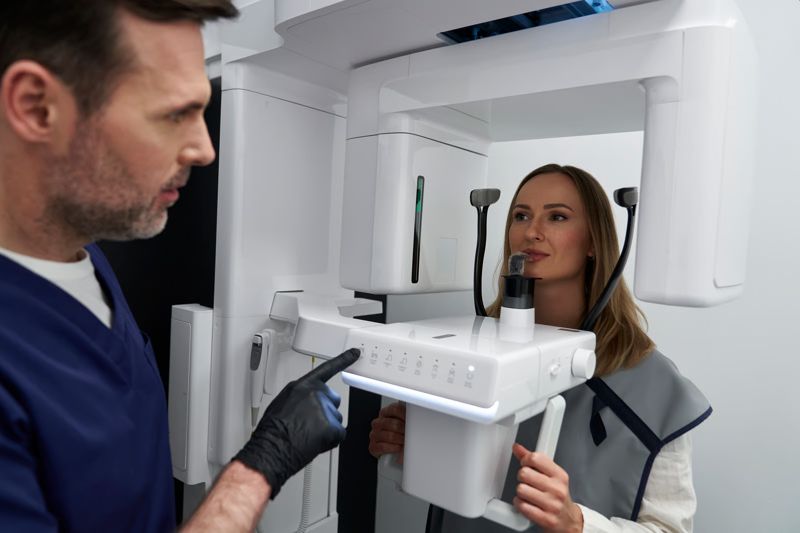
Modern dentistry has evolved far beyond traditional examinations and standard dental X-rays. Thanks to advances in diagnostic imaging, dentists can now plan treatments with exceptional precision, giving patients greater confidence in both the safety and success of their care.
One of the most significant developments in recent years is the introduction of Cone Beam Computed Tomography (CBCT) scanners. Unlike conventional dental X-rays, a CBCT scanner creates highly detailed three-dimensional images of your teeth, jaw, nerves and surrounding structures, providing dentists with a complete picture before treatment begins.
While many dental practices still refer patients to external imaging centres for these scans, having an in-house CBCT scanner at Avenue Dental Practice offers a range of advantages that make dental treatment safer, quicker and far more convenient.
In this article, we’ll explore what a CBCT scanner is, how it works, and why choosing a dental practice with this technology can make a real difference to your treatment journey.
What Is a CBCT Scanner?
A Cone Beam Computed Tomography (CBCT) scanner is an advanced imaging system specifically designed for dental and maxillofacial care.
Rather than producing a flat, two-dimensional image like a standard dental X-ray, a CBCT scanner rotates around your head to capture hundreds of images from different angles. These are then combined to create an accurate three-dimensional model of your teeth, jawbones, facial structures and surrounding anatomy.
This detailed view allows your dentist to identify issues that may not be visible on conventional X-rays and to plan treatment with significantly greater accuracy.
Why 3D Imaging Matters
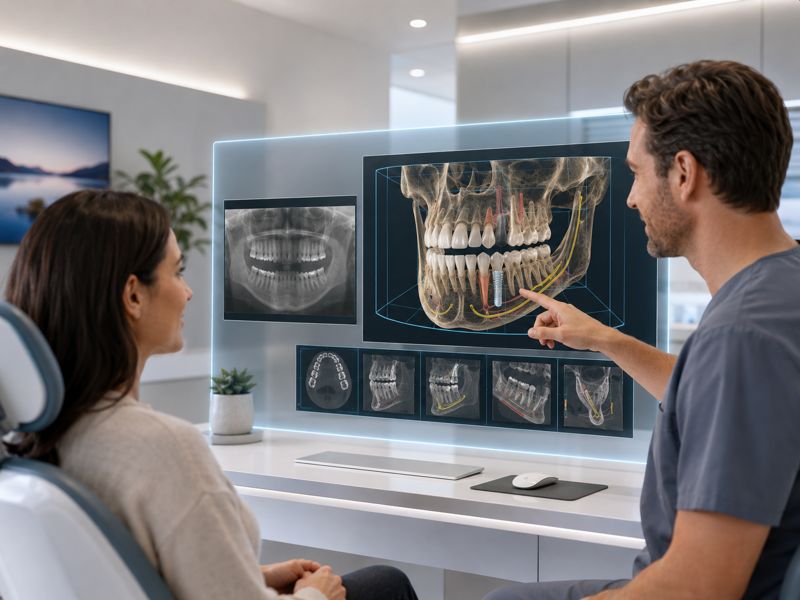
Every patient’s mouth is unique.
To provide safe and predictable treatment, dentists need to understand the exact position of teeth, roots, nerves, bone density and surrounding structures before carrying out certain procedures.
Traditional X-rays remain an important diagnostic tool, but they can only show limited information because they flatten complex structures into a single image.
A CBCT scan removes much of this uncertainty by providing a complete three-dimensional view, enabling dentists to make more informed clinical decisions.
This level of detail can improve diagnosis, reduce the risk of complications and help deliver more successful treatment outcomes.
Faster Diagnosis Without Leaving the Practice
One of the greatest benefits of an in-house CBCT scanner is convenience.
At practices without their own scanner, patients are often referred to another clinic or imaging centre for their scan. This means arranging another appointment, travelling to a different location and waiting for the images to be sent back before treatment planning can begin.
Having the scanner on-site removes these extra steps.
Your dentist can arrange the scan during your visit, review the results promptly and discuss your treatment options without unnecessary delays.
For many patients, this means:
- Fewer appointments
- Less travelling
- Faster diagnosis
- Quicker treatment planning
- Reduced waiting times
Instead of stretching treatment over several weeks, the entire process can often move forward much more efficiently.
Improved Safety During Dental Implant Treatment
Dental implants require careful planning.
The implant must be positioned precisely within the jawbone while avoiding nearby nerves, sinuses and other important anatomical structures.
A CBCT scan allows the dentist to assess:
- Bone height
- Bone width
- Bone density
- Nerve locations
- Sinus position
- Overall jaw anatomy
This information enables highly accurate implant planning before the procedure begins.
The result is a safer placement process with greater predictability and a higher likelihood of long-term implant success.
Better Planning for Tooth Extractions
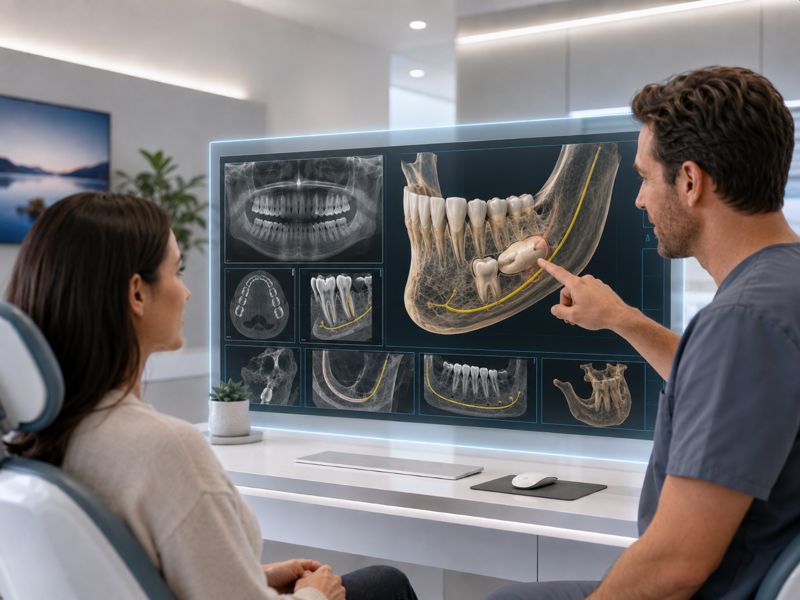
Not every tooth extraction is straightforward.
Wisdom teeth, impacted teeth and severely damaged teeth can often sit close to important nerves or neighbouring tooth roots.
A CBCT scan gives the dentist a complete understanding of the tooth’s position before treatment begins.
This allows them to plan the safest extraction method while minimising unnecessary trauma to surrounding tissues.
Patients benefit from more predictable procedures and a reduced likelihood of unexpected complications during surgery.
More Accurate Root Canal Treatment
Root canal treatment depends upon locating and cleaning every root canal inside the tooth.
Some teeth have unusually shaped root systems or extra canals that cannot always be seen clearly on conventional X-rays.
Three-dimensional CBCT imaging provides far greater visibility of these complex structures, helping dentists identify hidden canals, root fractures or infections.
This improves treatment accuracy and increases the chances of preserving the natural tooth.
Detecting Problems Earlier
Another major advantage of CBCT technology is its ability to detect conditions that may otherwise go unnoticed.
The detailed images can reveal:
- Hidden infections
- Bone loss
- Cysts
- Jaw abnormalities
- Impacted teeth
- Root fractures
- Changes around previous dental work
Early diagnosis allows treatment to begin before problems become more severe, often reducing both treatment complexity and overall costs.
Supporting Orthodontic Treatment
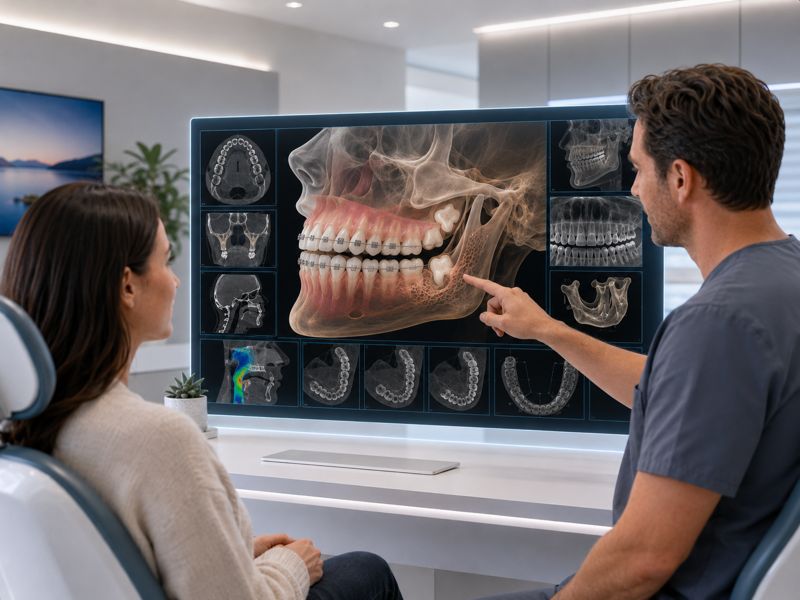
For patients considering teeth straightening, understanding the position of teeth beneath the gums is essential.
CBCT imaging enables dentists to evaluate:
- Tooth positioning
- Jaw alignment
- Bone support
- Impacted teeth
- Airway anatomy
This information helps create personalised orthodontic treatment plans while reducing the risk of unwanted tooth movement or complications.
Greater Confidence Through Better Planning
Many patients feel anxious about dental treatment because they are unsure what to expect.
Advanced imaging helps improve communication between the dentist and the patient.
Three-dimensional images make it much easier to explain:
- The cause of a dental problem
- Available treatment options
- Expected outcomes
- Potential risks
- The reasons behind clinical recommendations
Seeing their own dental anatomy often helps patients better understand their treatment and feel more confident about proceeding.
Fewer Referrals Mean Less Stress
When specialist imaging is only available elsewhere, patients often need to attend multiple appointments across different locations.
This can be inconvenient, particularly for:
- Busy professionals
- Parents
- Elderly patients
- Those with mobility difficulties
- Nervous dental patients
An in-house CBCT scanner keeps much of the diagnostic process under one roof.
Patients benefit from a more streamlined experience without the inconvenience of travelling between different providers.
Saving Valuable Time
Time matters for both patients and clinicians.
Because scans can be taken immediately, dentists can often:
- Confirm diagnoses during the same visit
- Plan treatment more quickly
- Arrange procedures sooner
- Reduce administrative delays
This faster workflow can significantly shorten the overall treatment journey.
Rather than waiting days or weeks for external imaging appointments and reports, treatment planning can often begin straight away.
Comfortable and Non-Invasive
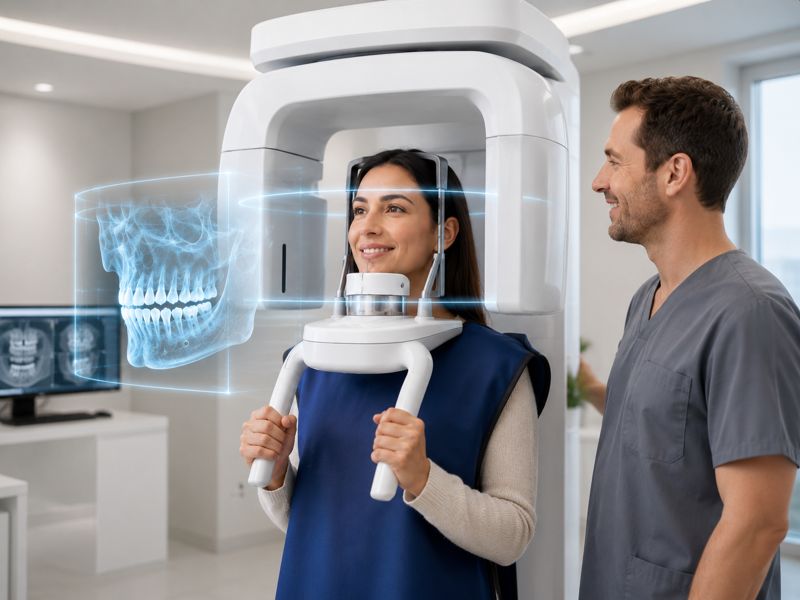
Patients are often pleasantly surprised by how quick and straightforward a CBCT scan is.
The process is entirely non-invasive.
Typically, the patient stands or sits while the scanner rotates around their head for a short period, capturing the required images without discomfort.
No impressions, injections or lengthy preparation are required.
The scan itself usually takes less than a minute, making it one of the quickest parts of many dental appointments.
Is a CBCT Scan Needed for Every Patient?
No.
Although CBCT technology offers exceptional diagnostic capabilities, it is not necessary for every dental procedure.
Dentists prescribe CBCT imaging only when the additional information will help improve diagnosis, treatment planning or patient safety.
Common reasons include:
- Dental implants
- Complex tooth extractions
- Root canal treatment
- Orthodontics
- Jaw joint assessment
- Facial pain investigations
- Bone assessment
- Surgical planning
Your dentist will explain whether a CBCT scan is appropriate for your individual circumstances.
Investing in Better Patient Care
An in-house CBCT scanner represents a significant investment in modern dental technology.
For patients, however, the benefits are clear.
Having advanced imaging available within the practice supports:
- More accurate diagnoses
- Safer procedures
- Better treatment planning
- Improved patient communication
- Greater convenience
- Faster appointments
- Reduced referrals
- More efficient care
These advantages contribute to a smoother, more reassuring dental experience from consultation through to treatment completion.
The Future of Modern Dentistry
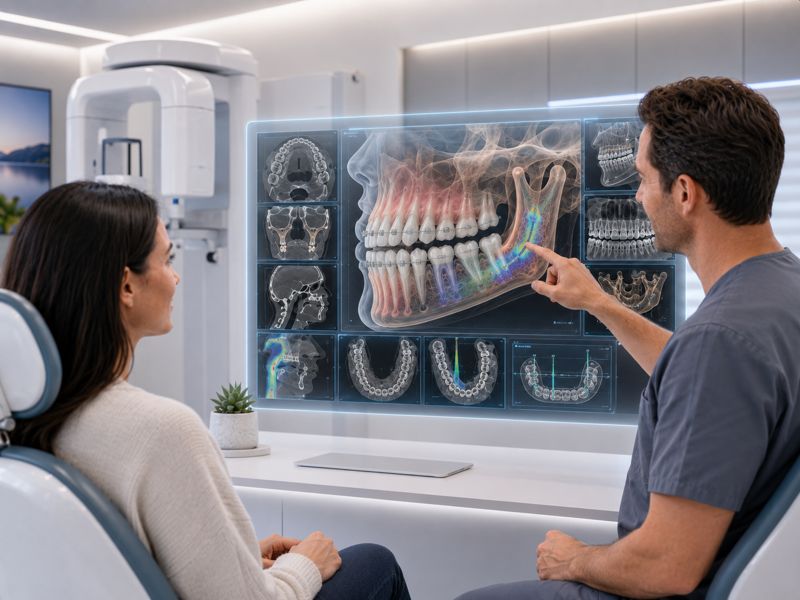
Digital dentistry continues to transform the way patients receive care.
Advanced imaging technologies such as CBCT are helping dentists deliver increasingly personalised treatment while improving safety and clinical outcomes.
As more practices invest in comprehensive diagnostic equipment, patients can expect shorter treatment journeys, more accurate diagnoses and greater confidence in their care.
For complex procedures in particular, three-dimensional imaging has become an invaluable tool that supports both clinicians and patients alike.
Conclusion
Choosing a dental practice with an in-house CBCT scanner offers far more than simply access to advanced technology.
It creates a smoother, faster and more efficient treatment journey by allowing detailed diagnosis and treatment planning to take place in one location. Whether you’re considering dental implants, undergoing root canal treatment, requiring a complex extraction or simply need a more detailed assessment, 3D imaging provides your dentist with the information needed to plan your care with confidence.
Ultimately, this means safer procedures, fewer appointments, reduced delays and a more comfortable experience from start to finish. As dentistry continues to embrace innovative technology, in-house CBCT scanning is playing an increasingly important role in delivering high-quality, patient-focused care that combines precision, convenience and peace of mind.