
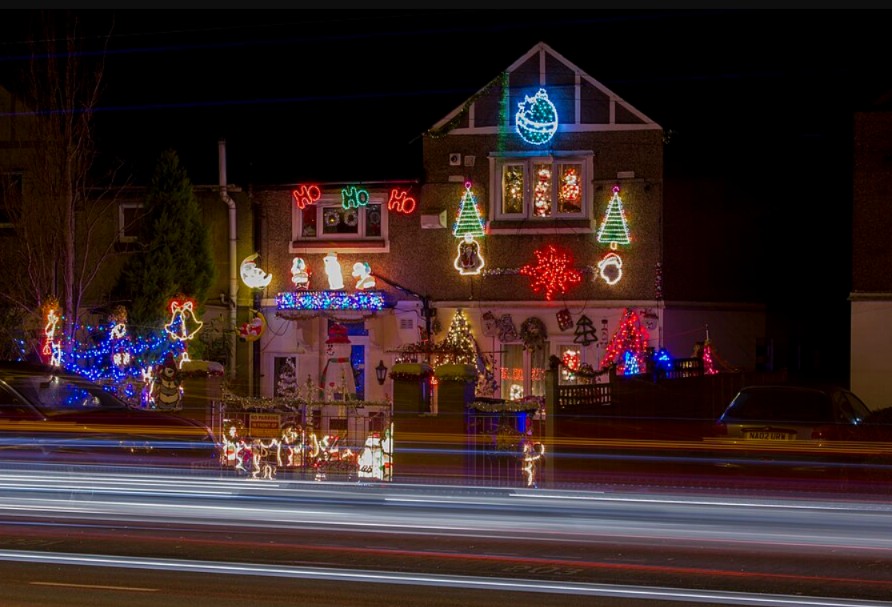
Putting up lights outside the house is one of those jobs that looks simple until the ladder comes out. Tangled cables, a dodgy socket and a rapidly dropping temperature can turn a cheerful afternoon into a frustrating one. A bit of planning beforehand makes the whole thing smoother, safer and much more enjoyable for everyone involved.
Plan Before Picking Up the Ladder
The best displays begin on paper, or at least in the head. Walking around the outside of the house and deciding where lights will go saves a lot of wasted effort. Rooflines, window frames, porches and trees are the usual candidates, and measuring each one means the right length of string can be bought first time.
It’s also worth deciding where the power will come from. A socket inside a window or garage is often the easiest option, and knowing the distance to the nearest one avoids the temptation to string several extension leads together.
Check What the Lights Are Built For
The packaging matters more than it might seem. Indoor and outdoor strings can look remarkably similar, but only products made for outside use have the sealing and insulation to handle moisture. When choosing Christmas outdoor lights, look for a clear outdoor rating, ideally one that mentions protection against splashing water, and a plug and transformer designed for the same purpose.
Length and bulb count are worth checking against the plan. Too short and the display ends awkwardly, too long and the excess has to be bundled somewhere unsafe. Connectable strings give a bit more flexibility, provided the maximum run stated by the manufacturer isn’t exceeded.
Powering Things Up Properly

Anything plugged in outdoors should be protected by a residual current device, which switches the supply off in a fraction of a second if a fault occurs. Many modern homes have these built into the consumer unit, and plug-in versions are inexpensive for those that don’t. Extension leads used outside need to be rated for it, with covers over connections to keep rain out.
Plugs and connectors should be raised off the ground, away from puddles and snow, and a small plastic box or purpose-made cover helps keep them dry. Checking every string before it goes up is another sensible step, since a fault is far easier to spot on a living-room floor than from halfway up a ladder.
Ladder Sense
Ladders cause a surprising number of household accidents every winter, so a few basic rules are worth following. The ground should be firm and level, the ladder at a stable angle and someone should hold the base. Reaching too far sideways is a common mistake, and it’s safer to climb down and move the ladder than to stretch.
Gloves help when it’s cold, but they can also make clips fiddly. Fixing lights from the ground with an extendable pole is an option for lower areas, and anything too high or awkward might be best left alone or handed to a professional.
Fixing Lights Without Damaging the House
Nails and staples can pierce cables and cause damage that isn’t obvious until later. Plastic clips designed for gutters, tiles or window frames are a much better option, and they can be removed easily at the end of the season. Trees and shrubs usually don’t need any fixings at all, since lights can simply be wrapped loosely around branches.
Leaving a little slack in the cable matters, because wind and temperature changes cause movement. Tightly stretched strings can snap or pull out of connectors, which leaves dark patches that spoil the effect.
The weather deserves a glance before work begins. Wet roofs, strong winds and icy paths all raise the risk of a fall, so postponing the job by a day is usually a better call than pressing on. A dry, still afternoon in November is ideal, and the light fades slowly enough to test everything properly once it’s up.
Getting the Family Involved Safely
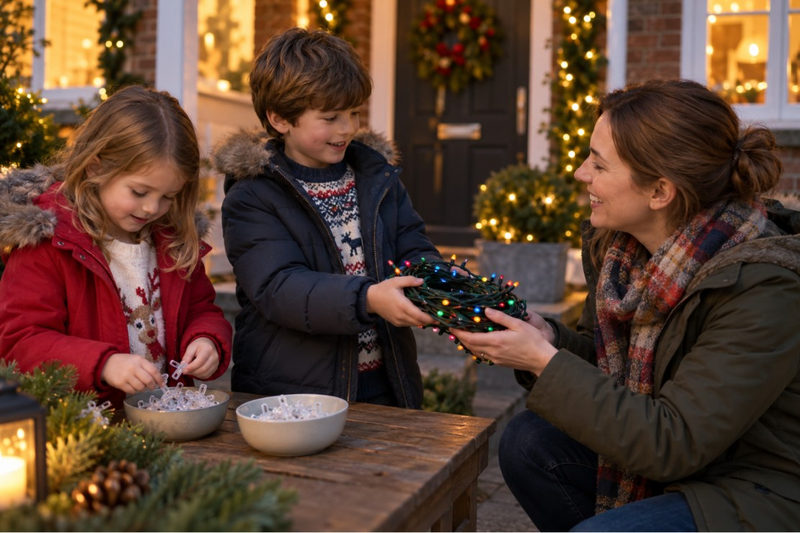
Children enjoy being part of the process, and there are plenty of safe jobs for them. They can sort clips, pass lights up to an adult or decide which colours to use. Keeping them away from ladders, plugs and sockets is simple enough, as long as the tasks are clear from the start.
A switch-on moment is a lovely reward for the effort. Hot drinks, a few friends and a countdown from the youngest member of the household make an ordinary evening feel special, and it gives the whole project a satisfying end. If you’re looking for more ways to make the season feel special for the kids, our Lapland UK Manchester review is a good place to start.
Timers, Energy and Taking It All Down
A simple outdoor timer saves effort and electricity. Lights can come on at dusk and switch off at a set hour, which also keeps neighbours happy. LED strings use relatively little power, so running costs stay modest even when they’re on for several hours a day.
At the end of the season, lights should come down on a dry day and be wound loosely around a card or reel. Wiping away dirt, checking for damage and storing everything in a labelled box makes next year’s job a good deal easier. With a bit of care, a decent set of lights can last for many Christmases.
A quick walk around the garden after dark is a good final check. Any section that’s gone dim or flickers can be traced and fixed while the ladder’s still out, which saves a second trip later in the month.