

Life has a way of rearranging itself without much warning. A job offer means a move across the country. A new baby arrives. A school place comes through in another town. Adults are busy coping with the logistics, and it’s easy to forget that children are taking it all in too, with far fewer words to describe how it feels.
Children rarely say they feel unsettled. They show it. They become clingy, or cross, or unusually quiet. They regress a little, asking for things they gave up months ago. None of that is unusual, and most of it passes. What helps is giving them ways to cope that don’t depend on talking.
Play is one of the best. It’s how children make sense of the world, and when the world has just shifted, it does a lot of quiet work.
Give Them Something That’s Theirs
When everything around a child is unfamiliar, a few familiar things matter more than usual. Keep favourite toys and bedtime items close, and unpack their room first when you move. It signals that this new place is theirs too.
Beyond that, a new thing to look forward to can help. Something that belongs to the new chapter rather than the old.
Independence Through Movement
For children aged around four to eight, a first proper bike can be that thing. Browse a range of kids’ bikes and you’ll see how many sizes there are, so it’s worth getting the fit right: a child should be able to sit and put the balls of both feet on the floor, and reach the brakes comfortably.
What a bike gives a child going through a change is a sense of control. They decide where to go, how fast, and when to stop. Learning something new, wobbling, falling off and getting back on again is its own lesson, and each small success is something they can point to as theirs.
It also builds a connection to the new place. A child on a bike explores the street, notices the park, and, if you’re lucky, gets talking to other children doing the same. Ride together at first. Pick a short route, get to know it, and let them lead the way a little further each time.
Playing it Out
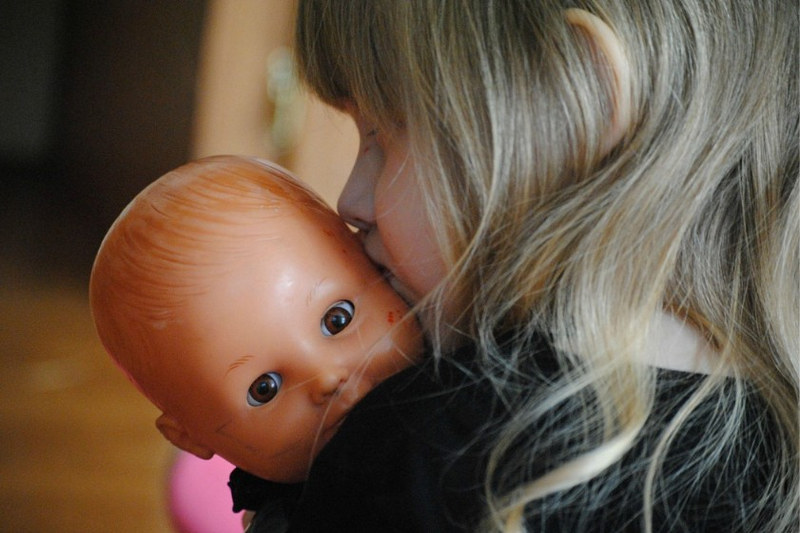
Younger children, and many older ones, process big events through pretend play. If a new baby is on the way, you may find a doll being fed, changed and put down for a nap with great seriousness. If it’s a house move, the dolls will pack boxes and say goodbye. If it’s a new school, you’ll hear the register being called, often in a surprisingly accurate voice.
It’s worth leaving space for that. A doll set with furniture and a few accessories gives a child a ready-made world to act things out in, so they can start straight away rather than getting stuck on the setting. They’ll often rehearse the thing they’re worried about, over and over, until it feels manageable.
You don’t need to direct it. Listening is usually enough. If a child has a character say they’re frightened of the new place, you don’t need to fix it. You can say, as a neighbour or a friend might, that it sounds like a big change, and leave it there.
Keep Routines Steady
Where everything else is shifting, routine is the anchor. Keep mealtimes, bedtimes and bedtime stories as predictable as you can, even if they’re happening in a different room or a different house. Familiarity tells a child that the important things haven’t gone anywhere.
Try to hold onto a couple of small rituals too: a Friday pizza night, a Sunday walk, a particular song in the car. They don’t have to be elaborate. They just need to happen.
Talk About it in Small Doses
Children tend to deal with big feelings in short bursts. A long, serious conversation can feel like pressure, while a chat in the car or at bedtime, when you’re not looking directly at each other, tends to go better.
Use simple, honest language, and answer questions plainly. If you don’t know something, such as who their teacher will be, say so, and say what you’ll do about it. Tell them what’s staying the same as well as what’s changing.
Make the New Place Familiar

Visit before you start, where you can. Walk past the new school, find the park, look at the new house from the outside. For a child, a place they’ve seen before is a lot less daunting than one they meet for the first time on the day.
Get involved in small ways too. A trip to the local library, a walk to the shop, saying hello to a neighbour. It all builds a sense that this is somewhere that belongs to you.
Look After Yourself Too
Children take their cues from the adults around them. A parent who’s calm, or at least trying to be, makes the whole thing feel safer. That doesn’t mean pretending to be fine. It means taking the opportunity to rest when you can, ask for help and lower your standards for a few weeks. Cereal for tea once in a while is not a disaster.
It Does Get Easier
Most children adapt faster than their parents expect. A few weeks in, there’s usually a moment when you realise they’ve stopped talking about the old place and started talking about the new one, or when a friend’s name comes up that you’ve never heard.
Until then, patience, routine and a bit of play go a long way. And if the unsettled behaviour hangs around for longer than seems reasonable, it’s worth a chat with the school, your GP or your health visitor, who see this all the time and can help.