
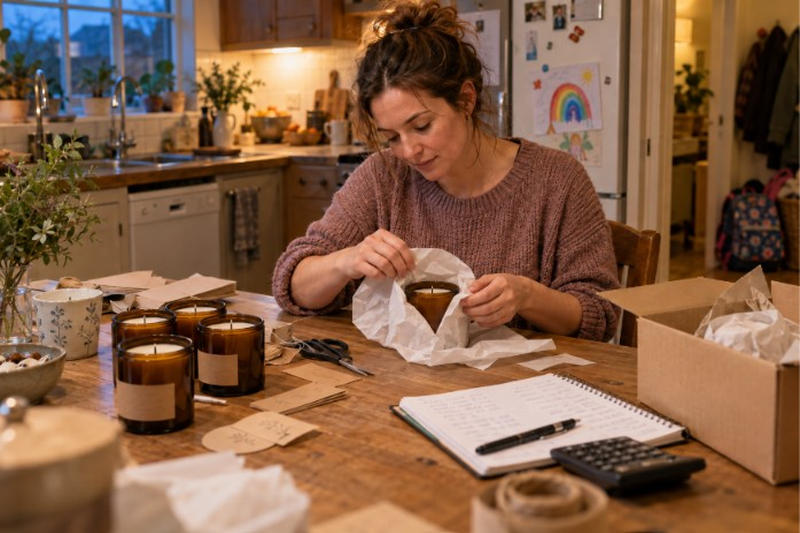
Every parent who makes things has had that moment. A friend buys one of your candles, tells everyone about it, and before long you’re up at midnight working out material costs and wondering whether this could actually bring in proper money on a regular basis. The market backs that up. According to the Crafts Council’s Market for Craft research, 73% of UK adults bought craft in a single year, with total sales breaking through £3 billion, and a third of those buyers did their shopping online.
If you’ve got a decent internet connection and something people actually want, a real customer base already exists for you, even if it won’t seem that way when you’re hunched over the kitchen table with a glue gun after the kids have gone to bed. The demand is genuinely there. Getting from “people like my stuff” to “this actually pays me” takes a bit of groundwork, and that’s what the rest of this covers.
Pick What You’ll Actually Finish
Whatever you decide to sell needs to fit around your actual life, not some fantasy version of it where you’ve got six quiet hours every afternoon to yourself. Candles, printed cards, resin jewellery, and sewn accessories all suit parents well because you can put them down when a child screams and pick them back up later without ruining the entire batch. Think about what you can realistically produce in a couple of hours on a weekday evening, because that’s probably the reality of your schedule for the next year at least.
Repeatability counts just as much as the product itself. If every single piece requires a bespoke custom process from start to finish, you’ll never build enough stock when your only working hours are the gaps between school runs, mealtimes, homework, and bedtime routines.
What HMRC Expects from You
HMRC gives you a £1,000 trading allowance, which means you can earn up to that amount from self-employment in a tax year without needing to file a return. That’s enough room for most people to test things out properly before anything gets official. Go past that threshold and you’ll need to register as a sole trader and start keeping proper records of income and expenses.
One newer rule catches a lot of sellers off guard, though. Since January 2024, digital platforms like Etsy and Vinted have been required to report seller earnings directly to HMRC. That doesn’t mean you’ll automatically owe tax on every sale. But HMRC will see exactly what you’ve sold and how much you made, so keep your records clean and organised right from day one or you could end up with an unpleasant surprise further down the road.
How to Price Without Underselling Yourself
Add up every cost first: materials, packaging, postage, platform fees. Then decide what your time is genuinely worth per hour and factor that in on top, because skipping this step is exactly how people end up doing enormous amounts of work for almost nothing in return. Your final price will probably seem too high when you look at it, but it almost certainly isn’t.
Most new sellers price based on what they’d personally be willing to pay, and they wind up earning pennies per hour as a direct result of that thinking. So do the maths honestly, even if the number makes you uncomfortable, and trust it.
How to Find Buyers and Keep Them Coming Back

Once you’ve listed a decent product, the harder part kicks in. People will need a reason to buy from you. GTM insights across businesses of all sizes point to one consistent finding: that first sale to a stranger will always cost the most effort, and it’s your repeat buyers who’ll keep a small operation going over time.
Your energy will stretch much further if you focus on turning one happy customer into a regular instead of chasing ten new faces every single week. Tuck a handwritten thank-you note into each parcel and include a discount code for their next order, because those small touches can give people a genuine reason to come back and buy from you again.
What a £20 Sale Can Actually Build
Big investments and polished brands aren’t requirements for getting this off the ground. A product you can reliably make will take you further than you’d think, especially if you understand the basic tax rules and genuinely look after the people who buy from you early on. Buyers are out there right now, actively hunting for handmade, personal items they won’t find on the high street, and they’re spending real money on them.
Replacing a full-time salary within six months won’t happen. That’s perfectly fine, because a small group of loyal repeat buyers who tell their friends about you will do far more for your business long-term than any paid advertising campaign you could run. Prove that someone values what you make enough to hand over money for it, and keep building from that one sale at a time. The skills are already there, so just list something and find out.