
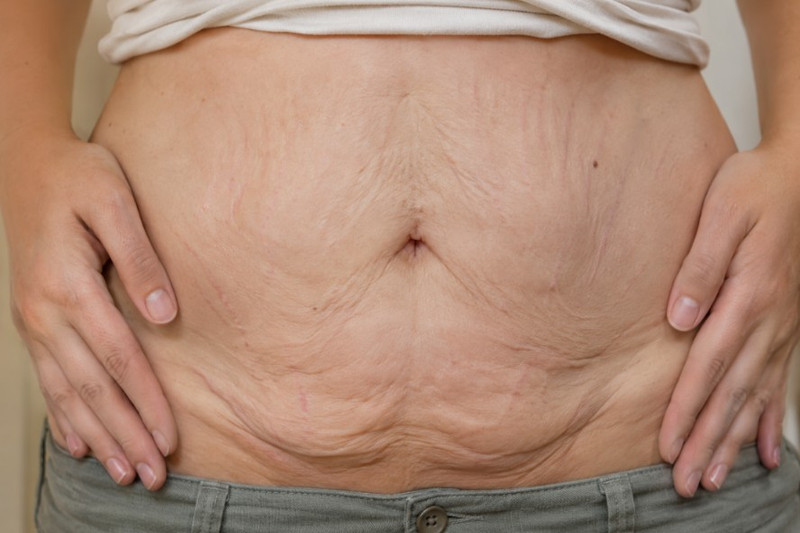
Plenty of mums have had the same conversation at least once, usually at the school gate or over a coffee that’s gone cold. The weight from pregnancy has mostly gone, the children are sleeping (some of the time), and yet the tummy still doesn’t look the way it did before. Somebody mentions a friend who “had something done”, somebody else says exercise will sort it, and everyone goes home slightly more confused than before.
The truth is less tidy. A softer tummy after children can come from three quite different things, and each one has a different fix. Some of them need nothing more than time and the right exercises. One of them can’t be changed by any amount of planks.
First, Check What’s Going On Underneath
Before thinking about skin at all, it’s worth ruling out the muscles. During pregnancy the two long muscles that run down the middle of the stomach often move apart as the womb grows. The NHS calls this diastasis recti and says a gap of about two finger widths is common. In most women it closes by the time the baby is 8 weeks old.
The NHS advice on your post-pregnancy body shows a simple way to check the gap yourself while lying on your back. If it’s still obvious at 8 weeks, the advice is to see your GP, who can refer you to a physiotherapist for specific exercises. In the meantime, the NHS says to steer clear of sit-ups, planks and high-impact workouts at first, and to avoid heavy lifting where possible. Easier said than done with a toddler, admittedly.
This matters because a bulge caused by separated muscles won’t respond to anything that works on the skin.
Three Problems That Look the Same in the Mirror
When you look down at your tummy, you’re seeing three layers at once:
- Fat, which responds to diet and activity over time.
- Muscle, which pelvic floor and deep core exercises can strengthen, and which a physio can assess properly.
- Skin, which stretched to make room for a baby and may or may not spring back.
Skin is the stubborn one. If it has been stretched past the point where it recoils, crunches won’t shrink it. That’s usually the moment people start reading about skin tightening.
Where Skin Tightening Fits
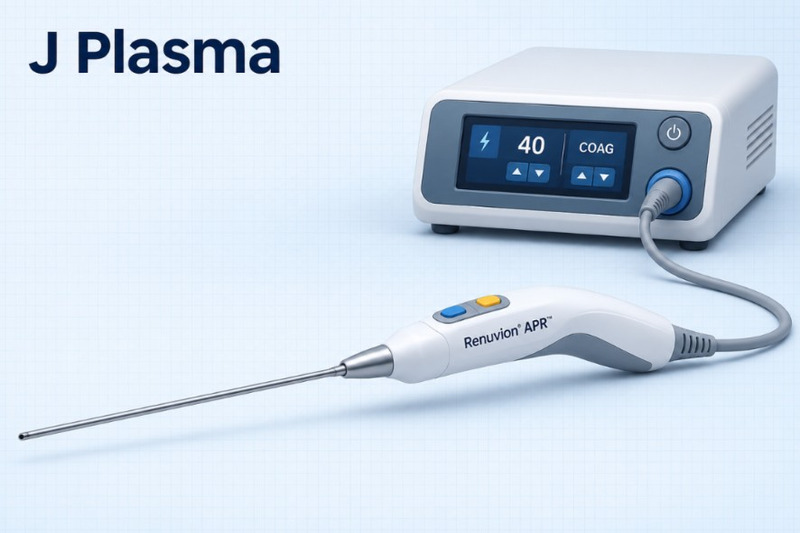
One option you’ll come across is J-Plasma, also sold under the name Renuvion. It uses helium plasma and radiofrequency energy under the skin, delivered through small entry points, to make the tissue contract. It’s often done straight after liposuction, through the same tiny openings.
What it doesn’t do is just as important. It doesn’t remove fat, and it doesn’t remove spare skin. The guide to AKM Clinic’s J-Plasma skin tightening describes it as a middle option between non-surgical devices and operations that cut skin away. The clinic says the people who tend to do well have mild to moderate looseness, a stable weight and realistic expectations, and it lists pregnancy-related changes among the reasons patients come to it.
When It Isn’t the Right Tool
The same clinic is fairly blunt about the limits. Skin that can be pinched and lifted well away from the body is usually better treated by removing it, for example with a tummy tuck. Its page puts the difference neatly: J-Plasma tightens the skin you keep, while a tummy tuck takes away skin you don’t need and can also repair separated muscles. No energy device can stitch muscles back together.
Anyone who smokes or uses nicotine, or has a health condition that isn’t well managed, is also asked to pause. And if you think another baby might be on the way one day, it makes sense to wait. AKM’s own tummy tuck guidance advises holding off while you’re still planning another pregnancy, and the logic is the same for anything aimed at a tummy that may be stretched again.
Recovery When There Are Children at Home
This is the part most articles skip. J-Plasma usually takes two to three hours, and the clinic expects the first phase of recovery to take about a week. Its week-by-week guide says to expect tightness, swelling and bruising for the first few days, short walks and no heavy lifting during the first week, and a gradual return to normal activity over weeks two to six.
“No heavy lifting” is a real plan when your children are small. Who does the school run, the bath and the car seat? Swelling can make the result look uneven for a while, too. The clinic says the shape usually looks more settled between weeks two and six, with refinement carrying on after three months. It also points out that the improvement is durable rather than permanent, and that a change in weight later on will affect how long it lasts.
Thinking About Treatment Abroad
Price is the obvious draw. In Istanbul, AKM Clinic prices J-Plasma from £3,000 with hotel and transfers included, and puts the London equivalent at around £7,500. Those are the clinic’s own figures, so treat them as a starting point for comparison rather than the whole story.
The NHS page about having cosmetic procedures overseas recommends seeing your surgeon twice before any operation, and says the gap between consultation and surgery is usually a fortnight in the UK. It adds that ordinary travel cover won’t usually pay out if an operation goes wrong, and suggests leaving five to seven days between something like liposuction and the flight home. A holiday straight afterwards isn’t realistic either: the NHS says you need to rest, stay out of the sun and keep out of the water.
So the real budget includes your flights, the extra nights away, childcare at home and a plan for who you’d call if something felt wrong once you were back.
Knowing Who Would Treat You
Dr Akif Mehmetoğlu set up AKM Clinic and leads its clinical work. His specialty is dermatosurgery, and he is credited as the medical reviewer on the J-Plasma page. Two more surgeons appear alongside him there. Dr Aylin Yılmaz’s caseload is largely breast and body work, while Dr Göknil Gültekin’s title pairs ENT with facial plastics. The page doesn’t say which of them performs J-Plasma, so ask, then make sure the name you’re given is the one printed on the consent form.
Ask about risks, too. The clinic lists burns from the energy, fluid collecting under the skin (seroma), infection, lumps or unevenness, and swelling that lasts longer than expected. Temporary numbness is common. A fever, spreading redness, sudden swelling or any breathing difficulty after you’re home means contacting your GP, or going straight to A&E if it’s urgent.
The Honest Bottom Line
For some mums, the right answer is a physio referral and patience. For others it’s a tummy tuck once the family is complete, and for a smaller group with mild looseness, a tightening treatment may make a real difference. Doing nothing at all is a perfectly good choice too. Whatever you decide, start with what’s happening underneath, ask plenty of questions, and give yourself the same kindness you’d give a friend standing at that school gate.