
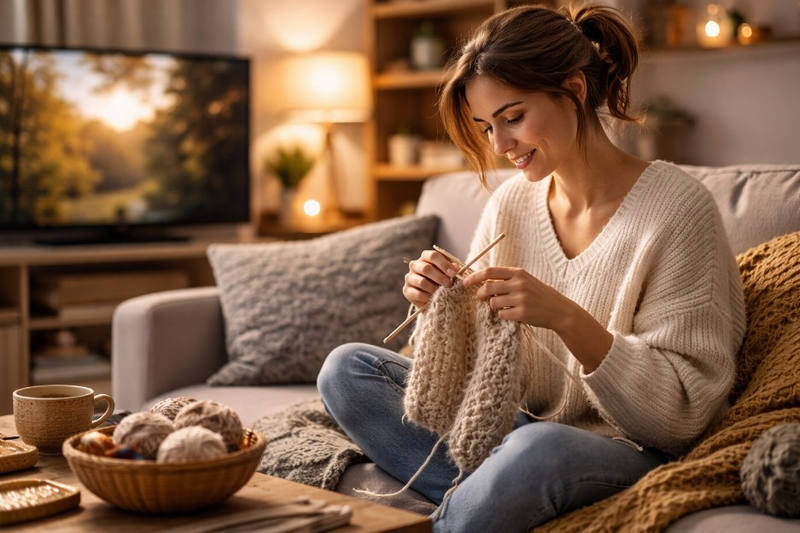
There’s a particular kind of satisfaction that comes from holding something you made—something that didn’t exist yesterday, and now does because you showed up, paid attention, and worked through the messy middle. It’s not just pride. It’s a quieter feeling: I can shape the world a little bit.
In an age where so much of life happens through a screen, making with your hands has become a small act of resistance. You slow down. You notice details. You accept imperfection as part of the process. And you end up with more than an object—you end up with a story you can touch.
If you’re looking for a low-barrier way to start, crafts like knitting are a great example because they’re structured enough to guide you, but flexible enough to feel personal. Some people ease in with patterns and curated materials—like these complete knitting kits for crafting enthusiasts—not because you need a kit to be “real,” but because fewer decisions upfront can make it easier to actually begin. Starting matters more than optimizing.
Why handmade feels so good (and why it’s not just nostalgia)
We often talk about crafting as “relaxing,” but that undersells what’s happening. Hands-on making combines focus, feedback, and tangible progress—three ingredients that are increasingly scarce in modern work.
Your brain likes visible progress
A lot of our daily effort is abstract: emails, meetings, planning documents, half-finished ideas. Crafting flips that. You can literally see the results of your time. One row becomes ten. Fabric becomes a hemmed edge. Clay becomes a mug. That visibility builds momentum.
Psychologists sometimes describe this as a form of “competence satisfaction”—the feeling that you can set a challenge and meet it. Even small wins count, especially when the world feels uncertain.
You enter a different kind of attention
Making things by hand invites a gentler focus than the jittery, notification-driven attention most of us are trained into. It’s not mindless, but it’s not frantic either. You’re present, hands moving, brain engaged just enough to quiet the mental noise.
This is one reason repetitive crafts knitting, whittling, embroidery—are so effective at settling the nervous system. The repetition provides structure; the small variations keep you interested.
Choosing a craft that actually fits your life
People abandon hobbies less because they lack discipline and more because they choose projects that don’t match their season of life. If you’re busy, perfectionistic, or easily overwhelmed, the “right” craft is the one that reduces friction.
Start smaller than you think you should
Ambition is great—until it becomes a reason to stall. A scarf sounds simple, but it can still be a long commitment. For some, a dishcloth, coaster, or small pouch is the perfect first finish: quick feedback, low pressure, and you still learn the core skills.
Ask yourself: What can I complete in a few sessions? Early completion is rocket fuel.
Don’t confuse aesthetics with readiness
It’s easy to pick a craft because you love the finished look (fair). But the process matters more than the outcome. If you love the idea of intricate colorwork but you don’t enjoy counting stitches, that’s a mismatch. The best hobby is one where you like the doing—at least most days.
The hidden skills you build when you make things
Handmade projects teach capabilities that quietly spill into the rest of your life. Not in a self-help poster way—in a practical, “I can handle this” way.
Problem-solving without panic
Every maker eventually hits the same moment: something goes wrong and you can’t Google your way out of it quickly. A seam puckers. A glaze cracks. You drop stitches and the shape looks… suspicious.
This is where crafting shines. You learn to diagnose, undo, redo, and keep going. You build patience with the process and confidence in your ability to recover. Over time, you internalize a powerful lesson: mistakes are part of making, not evidence you shouldn’t be making.
Comfort with “good enough”
Most crafts reward consistency more than intensity. Ten minutes a day beats a once-a-month marathon session that leaves you exhausted. Handmade work teaches sustainable progress—and a healthier relationship with imperfect outcomes.
That mindset is surprisingly transferable. You stop waiting for ideal conditions. You work with what you have.
Practical ways to make crafting stick (without turning it into homework)
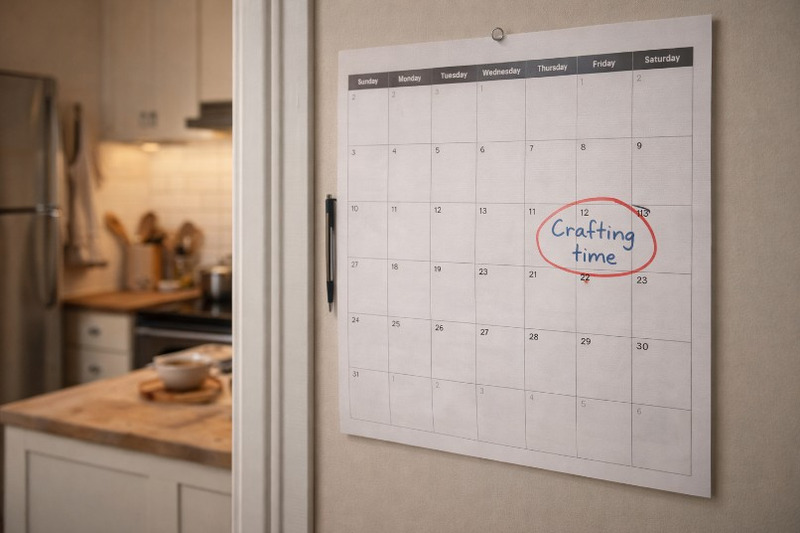
If you want this to become a real part of your life, design for reality. Motivation is unreliable; environment and habits do the heavy lifting.
Here are a few approaches that work across crafts:
- Keep your tools visible and ready. A project tucked away in a cupboard is a project that doesn’t happen. A basket by the sofa beats a perfectly organized drawer you never open.
- Define a “minimum session.” Decide what counts on a busy day—one row, one seam, five minutes. You’ll often do more once you start, but the key is lowering the start barrier.
- Make it social (lightly). A weekly craft night, a class, or even a friend you text progress photos to can add just enough accountability without pressure.
- Choose patterns/projects that match your attention. If you like to craft while watching TV, pick something repetitive. If you enjoy deep focus, pick something more complex.
One small note: it’s normal to cycle through phases. You might craft intensely for a month, then pause. That doesn’t mean you “failed” at the hobby. It means your life shifted. The work will wait for you.
What the handmade resurgence is really about
Yes, there’s a trend element—people post their makes, swap patterns, and romanticize slow living. But the bigger story is deeper: many of us are rediscovering agency.
When you make something with your hands, you’re not just consuming a finished product. You’re participating in the process that created it. You begin to understand materials, labor, and time differently. You notice quality. You repair things instead of replacing them. You value “enough” over endless upgrades.
And perhaps most importantly, you prove to yourself—stitch by stitch, step by step—that you can learn a skill as an adult. That’s a kind of joy that doesn’t wear off quickly.
So if you’ve been craving something grounding, something real, something that leaves you with more than another tab open—try making something. Let it be simple. Let it be imperfect. Let it be yours.