

Most parents have had that moment. You look up at dinner and everyone, including yourself, is staring at a phone. Nobody planned it that way. It just kind of happened. And that’s exactly the problem.
The Numbers Are Honestly Kind of Alarming
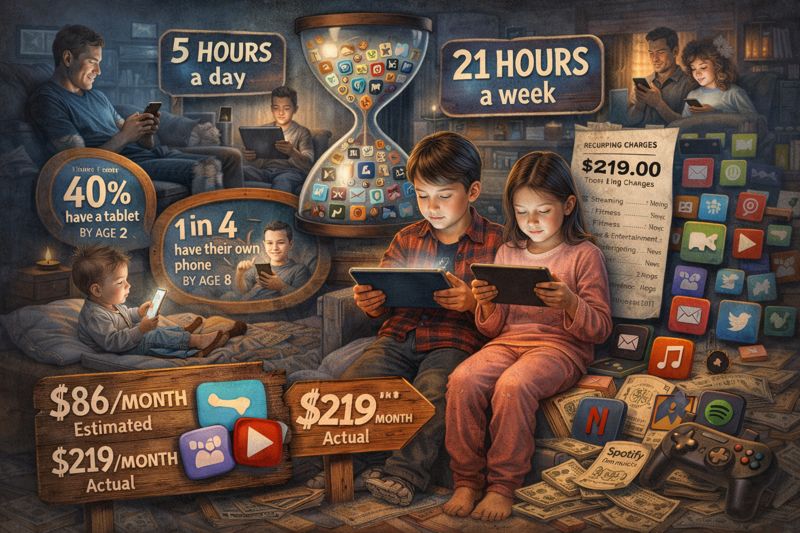
Kids average around 21 hours of screen time a week. Parents, when asked what sounds reasonable, say nine. That gap alone is worth sitting with.
It starts earlier than most people expect. About 40% of children have a tablet by age two. Nearly one in four have their own phone by age eight. And honestly, adults aren’t doing much better. Five hours a day on mobile apps is the average for Americans, and that’s not counting laptops or TV.
The money side sneaks up on families too. People estimate they spend around $86 a month on digital subscriptions. The real number averages $219. More than double what anyone thinks they’re paying. Streaming, gaming, music, fitness platforms, sports and entertainment services like 1xbet mobile, news apps… each one looks small on its own. Together they quietly eat through the budget every single month. Around 74% of people say they forget about recurring charges entirely. So yes, it’s a time problem and a money problem at the same time.
What Actually Happens Without Any Structure

Without a plan, devices fill every gap in the day. Waiting for dinner? Scroll. Bored for thirty seconds? YouTube. Can’t sleep? Phone.
Sleep is where most families feel it first. Screens push back melatonin, the brain stays switched on, and the phone goes dark but the kid doesn’t. For anyone already fighting bedtime, a device in the bedroom is basically a stolen hour every night.
The mental health side is harder to brush off. Teens with four or more hours of daily screen time report anxiety at roughly 27%. Among those who use screens less, it’s 12%. More than double. Not every child, not every time, but the pattern keeps showing up.
Attention is the quieter casualty. It happens slowly. Most parents only notice when homework starts taking three times longer than it should.
So What Does a Plan Actually Look Like
Not a ban. The word “strategy” can sound like punishment with a fancy label, so let’s be clear.
It’s more of a family agreement. Offline windows that everyone expects and actually agreed on, not handed down like a decree. Give kids a say in making the rules and they’re far more likely to follow them. Not a parenting hack. Just how people work.
Here’s what tends to stick in most households:
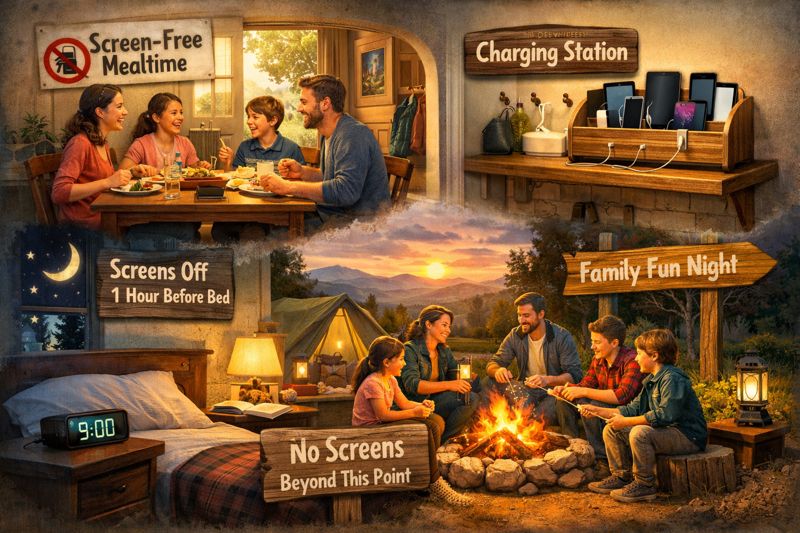
- Mealtimes are screen-free. Doctors have been saying this for years. Once it’s a habit, it stops feeling like a rule.
- Chargers stay outside bedrooms. Kitchen counter, hallway shelf, anywhere that isn’t the nightstand. One small change, genuinely big difference.
- Screens off an hour before bed. That’s the window where sleep protection actually happens.
- One screen-free activity a week that everyone actually wants to do. Not a substitute. Something chosen together.
The Part Nobody Wants to Hear


Parents go first. About 66% of parents between 18 and 49 say their own phone use is too high. Kids pick up on everything. If the adult in the room grabs their phone at every quiet moment, the household rules become a bit of a joke, fridge poster or not.
Nobody needs to go off-grid. The plan just has to include adults or it won’t hold. “No phones at dinner” means everyone’s phone stays in the kitchen, full stop.
Here’s the small irony: an app might actually help. Tools like Apple’s Screen Time or Android’s Digital Wellbeing show the real numbers. Seeing “four hours on YouTube, Tuesday” written out in cold numbers lands differently than a parent saying it out loud.
Getting Offline Together Is the Actual Point

Less screen time only works if something fills the space. Outdoor time restores attention. Board games bring back actual conversation. Cooking together does both. Not suggestions from a pamphlet. These things genuinely work.
Short breaks move the needle faster than most people expect. One week off social media links to a 16% drop in anxiety, a 25% reduction in depression markers, and around 14% less insomnia. One week.
Where to actually start? Pick one thing from this list and just do it this week:
- Choose one time slot every day that stays screen-free. Dinner is the obvious one.
- Move the chargers out of bedrooms tonight. Not eventually. Tonight.
- Decide together what “screens off” looks like in the evening. A set time, the router off, whatever works for your household.
- Put one screen-free activity on the calendar this weekend. Something everyone’s actually into.
- Set a reminder to check in about all of this in a month. Life changes, the plan can too.
Nearly 70% of people keep paying for subscriptions they forgot they had. Screen habits drift exactly the same way. Having a plan just means going in with some intention. And as anyone who has handed a toddler a tablet “just for five minutes” already knows, things really don’t sort themselves out.