
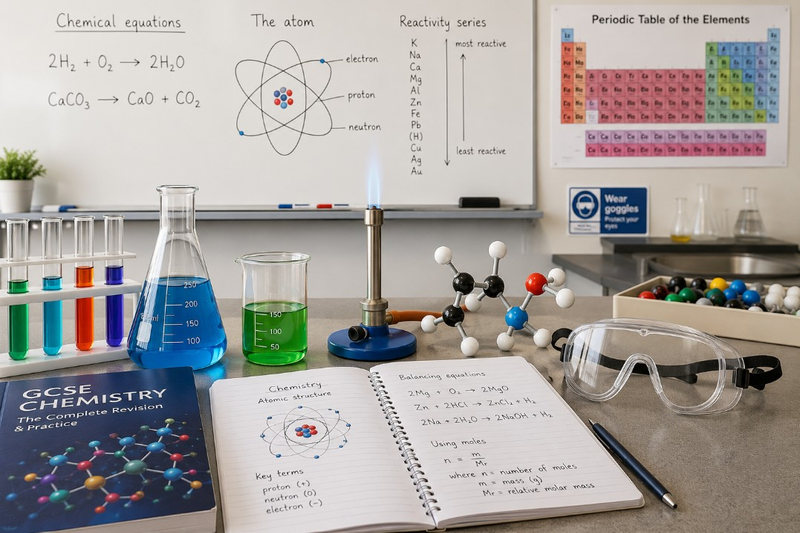
Managing a home with school-age kids feels like a full-time job. Chemistry often feels like a foreign language to both parents and teens. You might feel the pressure of upcoming exams mounting every day.
These simple strategies help families navigate the curriculum without the usual headache. Chemistry does not have to be a source of nightly tension in your house. Use these tips to make the learning process smoother for everyone involved. Small steps lead to big improvements in confidence and grades.
The Triple Science Advantage
Choosing the right path for science studies is a big decision for families. Focusing on GCSE Chemistry exam prep during these years creates a solid foundation for science careers. This choice often leads to more confidence in scientific thinking over time. Families should talk about these options early in year 9 to make the best plan.
Students who master these early concepts often find higher-level courses much easier to manage. Having a clear goal helps keep the daily study sessions focused and productive. It gives the student a sense of purpose and direction in their learning journey. You might find that having a target career in mind makes the hard work feel worth it.
Digital Tools for Daily Learning
Traditional textbooks can feel dull after a long day at school. Many busy families find that digital tools make learning more exciting for teens. A recent report from the ALP Institute suggests that AI platforms provide interactive simulations and virtual trips. These resources help students think creatively about scientific problems.
Using these tools for 15 minutes a day keeps the material fresh. You can find simulations that show how atoms bond in real time. This visual approach makes abstract ideas much easier to grasp. It allows students to experiment without any messy cleanup in the kitchen.
Virtual Labs and Simulations
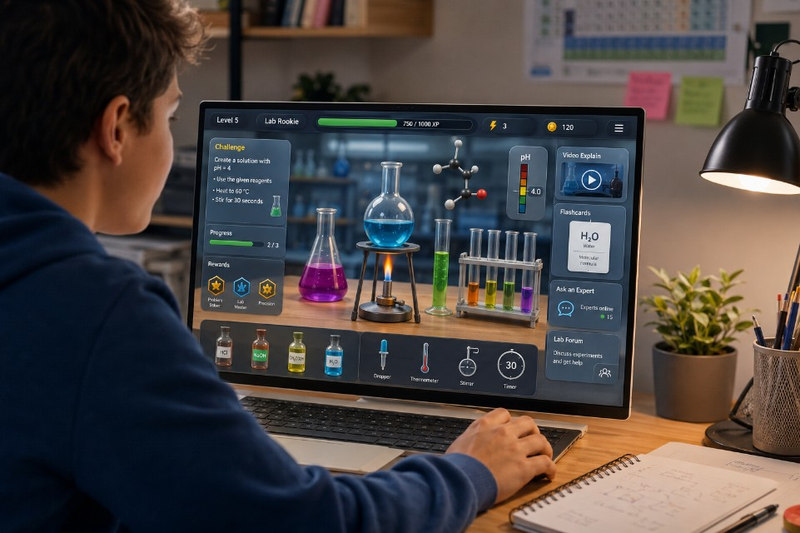
Teens often enjoy the gaming aspect of interactive learning platforms. It feels less like work and more like a challenge to solve. You can save over $50 on private tutoring by using these high-quality digital options instead.
- Try virtual lab simulations
- Watch short video explainers
- Use digital flashcards for symbols
- Access expert advice through online forums
Peer Teaching at the Dinner Table
Your child might learn best by explaining concepts to someone else. This method builds confidence and highlights gaps in their knowledge. A recent article from the University of York indicates that reciprocal peer-teaching is valuable for practical preparation. It helps develop skills that are useful for future jobs.
You can act as the student and let your teen teach you the periodic table. They might use a whiteboard to draw out reaction pathways for you. Explaining a topic out loud forces the brain to organize the information. It is a great way to bond as you get some revision done.
You will learn something new as they strengthen their memory. This technique works well for tricky topics like organic chemistry. It turns a boring study session into a lively conversation between family members. Keeping the atmosphere light makes the information much easier to digest.
Handling Time Pressure
Exam day brings a specific kind of stress for every family. Many parents worry that their kids will run out of time during the test. A government publication explored speed in science exams and found low omission rates. Most students finish the chemistry papers without skipping many items.
Practising with a timer helps build the necessary pace for the real event. You can set a clock for 10 minutes and ask them to complete 3 short questions. This builds the habit of moving quickly without feeling panicked. Success in the exam hall often comes down to this kind of steady practice.
It makes the actual test feel like just another practice session at home. Students feel much more relaxed when they know they can handle the clock. You can reward their speed with a favorite snack or a movie break. Positive reinforcement makes the hard work feel much more manageable.
Bridging the Maths Gap

Chemistry involves more calculations than many people realize. If a student struggles with numbers, they might find chemical equations difficult. An article from the British Society for Research into Learning Mathematics shows a drop in students who like learning maths.
Numbers in the Lab
Only 41% of pupils enjoyed the subject in 2023. Strengthening basic arithmetic skills often makes the science curriculum feel less daunting. You can help by reviewing simple multiplication or division during dinner. These small moments build the numerical fluency required for chemistry.
It takes the fear out of the more complex equations found in later chapters. You do not need to spend hours on this each night. Just a few minutes of mental maths can make a huge difference. Confidence with numbers is a gift that helps in every school subject.
- Practice balancing simple equations
- Review unit conversions regularly
- Use a calculator for complex sums
- Memorize common chemical formulas
Scientific Inquiry in Real Life
Letting kids ask questions about how things work encourages a deeper interest. Instead of just memorizing facts, they should look for the reason behind the reactions. A thesis from Bethel University notes that inquiry-based techniques empower students to own their learning.
This approach improves critical thinking and problem-solving skills. Kitchen experiments are a great way to start this process. You might look at how vinegar reacts with baking soda to clean a sink. Seeing chemistry in action makes the classroom lessons feel more relevant to real life.
Navigating Curriculum Changes
Rules for secondary education change depending on where you live. Families in different parts of the UK might face different requirements soon. A report from the Institute for Fiscal Studies mentions that new GCSEs in Wales start in September 2026.
Students there will no longer be able to study separate triple-science subjects. Staying informed about these local shifts helps you plan the right support. You might need to look for different revision guides or tutors based on these changes. Knowing what to expect reduces the surprise when exam season arrives.
Supporting a teenager through their science journey is a team effort. You do not need to be a scientist to help them succeed. Using these hacks reduces the daily friction of studying and homework. Small changes in how you approach the subject lead to big results. Focus on consistency and keep the atmosphere at home positive. Chemistry is just one step on a longer path of learning. With the right tools and a bit of patience, your family can handle the challenge.