

Getting to the shops, visiting friends, or simply moving around the house can feel impossible when mobility becomes limited. For many families across the UK, these everyday tasks turn into carefully planned operations that drain energy and independence. The struggle affects confidence, social connections, and quality of life in equal measure.
Powerchairs offer a practical solution, but the cost of new equipment often puts them out of reach. A standard electric wheelchair can cost thousands of pounds, creating a major barrier for those who need them most. This financial reality has led more people to look at the used powerchair market, where refurbished models provide the same freedom at a fraction of the price.
Looking Into Powerchair Options Within Budget Constraints

New powerchairs in the UK can be expensive, with prices varying widely depending on specifications. For many families, that price range is simply not realistic without financial support. This is where the used powerchair market becomes truly helpful.
Families interested in finding a range of refurbished models that have been serviced and tested before resale can browse used powerchairs from specialist mobility retailers. Indoor models tend to be lighter and more compact, suited to moving through hallways and smaller spaces. Outdoor-capable powerchairs are built with stronger motors, larger wheels, and longer battery life.
Battery life, weight capacity, and turning radius are three important factors that can affect daily usability. Checking these specifications carefully helps families match equipment to real-world needs.
Verifying Safety and Compliance
Any used powerchair should come with a full service history. This confirms that the equipment has been maintained properly and that key components, including the battery and braking system, have been checked regularly. Without this documentation, families have no way to judge the true condition of the chair.
UK safety standards for powered mobility devices are outlined in government guidelines. Families should check that any used model meets current safety requirements before making a purchase. Having a qualified technician inspect the chair adds reassurance, especially for signs of battery wear.
Assessing Mobility Needs Through NHS Pathways
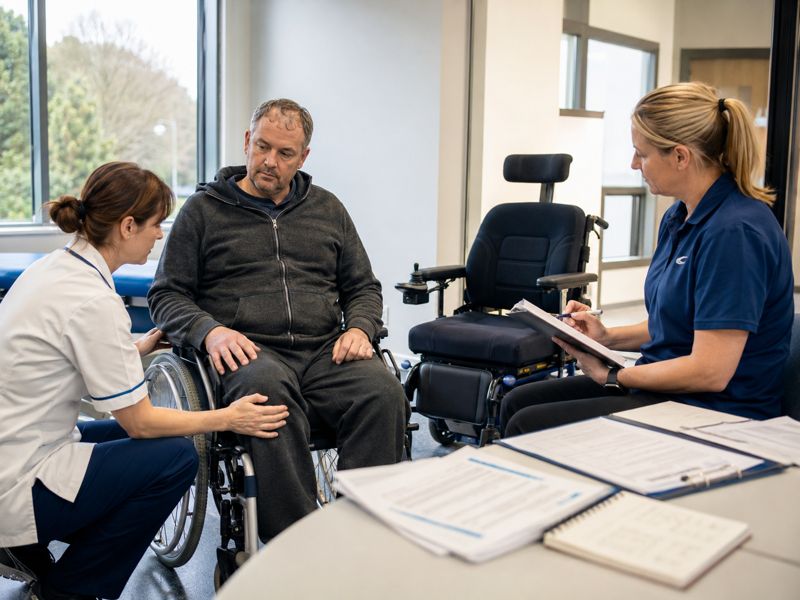
NHS Wheelchair Services provides assessments to determine what level of mobility support a person truly needs. Referrals typically come through a GP, consultant, or community health professional. The assessment process involves clinical evaluation of posture, function, and daily activity requirements.
Occupational therapists and physiotherapists play a central role in these assessments. They observe how a person moves, what tasks they struggle with, and what environment they live in. Their findings directly shape the type of equipment recommended or funded.
Documentation and Medical Evidence
A GP letter confirming the diagnosis and its impact on daily functioning is one of the most helpful documents to bring to an assessment. Specialist letters from consultants or hospital teams carry additional weight. These records give assessors a clearer picture of long-term needs rather than a snapshot of one day.
Keeping a short activity diary in the weeks before an assessment can also make the process smoother. Recording which tasks were difficult, how long they took, and what assistance was needed gives clinicians concrete information to work with. Honest communication throughout the appointment is equally important.
Creating a Safer Home Environment
Mobility assessments are not only about choosing the right equipment. Home safety also plays a major role in reducing accidents and helping people remain independent for longer. Small household issues can become much more serious when balance, strength, or coordination are affected.
Loose flooring, poor lighting, awkward furniture placement, and even cold draughts around the home can contribute to discomfort and instability. Families looking to improve safety at home may find it useful to understand how drafty windows can raise fall risk at home, particularly for older adults or people with limited mobility.
Occupational therapists often recommend practical home adjustments alongside mobility equipment to create a safer and more manageable living environment.
Funding Support and Financial Assistance Routes
The Motability Scheme allows people receiving the higher-rate mobility component of Personal Independence Payment or Disability Living Allowance to use that benefit towards a powerchair. The scheme covers maintenance and insurance, reducing the ongoing cost burden for eligible families. Full details are available through the official government Motability Scheme page.
Local authority grants and charitable organisations also provide financial support in some cases. Charities such as Whizz-Kidz and Newlife assist children with mobility needs, while organisations like Disability Grants offer searchable databases of available funding. Eligibility criteria vary, so early enquiry is advisable.
Community equipment services, run through local councils and NHS trusts, sometimes provide short-term loans of mobility equipment. This can be a helpful bridge while longer-term solutions are arranged. VAT exemptions are also available on mobility aids for individuals with a qualifying disability, reducing the purchase cost on eligible items.