
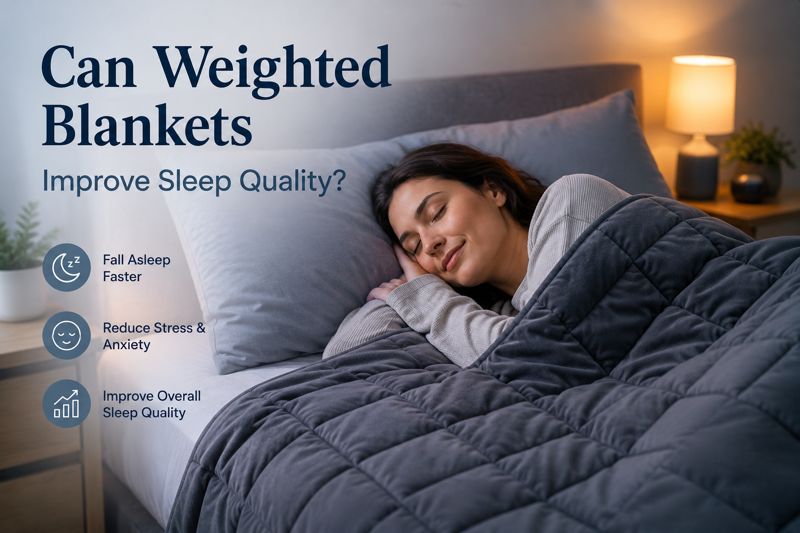
Weighted blankets went from niche therapeutic tool to mainstream wellness product in the space of about five years, which is usually a warning sign that marketing has outrun evidence. In this particular case the evidence is actually reasonable, though more nuanced than the breathless claims suggest.
A weighted blanket isn’t going to transform your sleep if the underlying problems are environmental or physiological. But for a specific set of situations, particularly involving anxiety, sensory regulation, or restless sleep, the evidence for meaningful benefit is better than most sleep accessories can offer.
What A Weighted Blanket Actually Is
A weighted blanket is a blanket with added weight, usually in the form of glass beads or plastic pellets distributed evenly throughout the fabric. Typical weights range from around 2kg to 12kg, with the general recommendation being roughly 10% of the user’s body weight. The added weight produces constant gentle pressure across the body, similar to being held firmly but without restriction.
The technique underlying the design is called deep pressure stimulation, and it has a long history in occupational therapy, particularly for autism and sensory processing differences. Temple Grandin’s famous squeeze machine, developed in the 1960s, applied the same principle: consistent distributed pressure that produces a calming effect. Weighted blankets translate this into a form useful during sleep.
The weight is meant to feel grounding rather than confining. When sized correctly, it produces a subtle sense of being held; when sized incorrectly (too heavy), it can feel suffocating or restricting. The difference matters for whether the blanket is useful or actively counterproductive.
The Mechanism Behind The Effect

Deep pressure stimulation appears to activate the parasympathetic nervous system, which is the branch responsible for rest, digestion, and recovery. Activation of this system lowers heart rate, reduces cortisol, and produces subjective calm. In people with anxiety, where the sympathetic nervous system tends to stay overactivated into the evening, the physical input from a weighted blanket can help shift the balance toward parasympathetic dominance.
The mechanism likely involves both direct neurological pathways and more general comfort effects. Pressure on the body’s proprioceptors provides sensory input that can reduce the hyperawareness associated with anxiety. The tactile feedback may also trigger the release of serotonin and melatonin, both of which support sleep, though the research on this specific chain is still developing.
Subjective reports consistently describe a sensation of being calmed, settled, or soothed under a weighted blanket, particularly during the first 15-30 minutes of use. This corresponds to when the autonomic shift is most likely occurring.
What The Research Actually Shows
Studies on weighted blankets have generally found modest but measurable benefits for specific populations. A 2020 Swedish study published in the Journal of Clinical Sleep Medicine looked at adults with major depressive disorder, bipolar disorder, generalised anxiety disorder, or ADHD and found that weighted blanket use over four weeks significantly reduced insomnia severity and improved daytime functioning compared to a lighter blanket control group.
Research on autistic children and adolescents has shown mixed but generally positive results, with some studies finding meaningful improvements in sleep onset and fewer awakenings, while others find more modest effects. The variability likely reflects individual differences in sensory processing; not everyone with autism benefits equally.
For general population insomnia, the evidence is thinner. Some studies have found small improvements in sleep quality and subjective feelings of being rested, while others have found no statistically significant effect compared to regular blankets. The picture appears to be that weighted blankets help most in populations where anxiety, sensory regulation, or hyperarousal are involved, and help less in cases of straightforward insomnia without those features.
Who Is Most Likely To Benefit

The clearest evidence for benefit exists in specific groups. People with anxiety disorders, particularly when anxiety disrupts sleep onset, often report meaningful improvement. People with ADHD, who frequently have sleep difficulties involving restlessness and difficulty settling, sometimes find weighted blankets helpful for transitioning to sleep.
Autistic individuals, particularly those with sensory seeking behaviours, often benefit from the consistent pressure input. Children with sensory processing differences can find weighted blankets useful for calming and settling, though this should be done with occupational therapy guidance for younger children.
People in acute stress periods, grief, or trauma recovery sometimes find weighted blankets helpful even if they haven’t previously had sleep issues. The calming effect can provide something like the comfort of being held during periods when actual human comfort is limited or insufficient.
Restless sleepers who move frequently during the night sometimes find the weight reduces their tendency to shift position, which can lead to longer consolidated sleep stretches. The evidence for this specific use is more anecdotal than rigorous.
Who Probably Won’t Benefit
Some groups are unlikely to find weighted blankets helpful or might find them actively uncomfortable. People who sleep hot often struggle with weighted blankets because the weight prevents heat dissipation; the thermal problem overrides any calming benefit. Summer use is particularly difficult unless the blanket is specifically designed for temperature regulation.
People who feel claustrophobic, have respiratory conditions, or dislike being constrained during sleep often find weighted blankets unpleasant rather than calming. Anxiety isn’t universal, and some anxious people experience pressure as triggering rather than soothing.
Those with mobility issues, certain medical conditions, or difficulty adjusting their position during sleep should consult a doctor before using a weighted blanket. The inability to easily move the weight off can be a problem during the night, and for some conditions (sleep apnoea, certain cardiac issues), the pressure may not be advisable.
Children under 2 shouldn’t use weighted blankets at all due to suffocation risk. For older children, weight should be conservative and use should be supervised, ideally with occupational therapy input.
The Weight Question
Getting the weight right matters more than most people realise. Too light, and the effect is minimal. Too heavy, and it becomes uncomfortable and restrictive. The standard guidance of roughly 10% of body weight is a reasonable starting point, though individual preferences vary.
Someone weighing 70kg would typically use a 7kg blanket. A heavier person might use 8-9kg. Going significantly above 10% is rarely more helpful and often becomes counterproductive. For couples sharing a bed, individual weighted blankets of appropriate size usually work better than a single large one sized for combined weight.
The distribution of weight also matters. Good weighted blankets use evenly distributed small compartments (quilted squares with beads inside) rather than loose filling that shifts to one side. Cheap weighted blankets that clump over time lose their effectiveness as the pressure becomes uneven.
Temperature Management

The biggest practical issue with weighted blankets is heat retention. A blanket that adds both weight and insulation can make hot sleep significantly worse. This is why many serious weighted blanket manufacturers now offer cooling versions with bamboo, cotton, or specialised breathable covers, and why the blanket often becomes a winter-only tool for people who sleep warm.
Some weighted blankets include cooling features like gel beads or moisture-wicking fabric. These are marginally more thermal-friendly than traditional versions but still warmer than sleeping without a weighted blanket at all. For people who want the calming effect without the heat, lighter-weight weighted blankets (around 5% of body weight rather than 10%) can provide some benefit with less insulation.
The rest of the bedding also matters. A weighted blanket used with breathable cotton or linen sheets performs better thermally than one used with heavier fabrics. The duvet on top compounds the problem further; stacking a weighted blanket on a heavy winter tog means you’re carrying two layers of insulation at once, which is why people who use weighted blankets often pair them with lightweight yet warm sleep covers even in cooler months. The full thermal system needs to balance.
What A Weighted Blanket Can’t Fix
A weighted blanket won’t address sleep problems caused by environmental factors (bad mattress, wrong temperature, excessive noise), medical conditions (sleep apnoea, thyroid dysfunction, chronic pain), poor sleep hygiene (inconsistent schedule, late caffeine, evening screen use), or severe insomnia that has become its own clinical condition.
Using a weighted blanket while continuing to sleep on a degraded mattress in a hot room with irregular hours is unlikely to produce much benefit. The blanket is a relatively modest intervention that works best as part of a properly optimised sleep setup rather than as a substitute for one.
This is part of why weighted blanket results in the research are often modest. The intervention is being added to environments that have other unaddressed problems, which limits how much improvement any single addition can produce.
The Honest Assessment
Weighted blankets have real, evidence-based benefits for specific populations, particularly those dealing with anxiety, sensory regulation needs, or hyperarousal. For these groups, the blanket is often worth trying and can produce meaningful improvement. For the general population of reasonably-sleeping adults with no specific issues, the effect is more modest and the blanket may not be worth the cost or the heat.
If you’re considering one, the honest framing is that it’s a moderate intervention that might help and probably won’t harm, assuming you pick the right weight and manage the thermal trade-off. The evidence supports trying it for anxiety-related sleep issues or sensory-related difficulty settling. The evidence doesn’t support it as a general sleep upgrade that will transform rest for anyone who buys one.
For most people, the sleep environment itself, mattress, bedding, temperature, light, consistency, produces larger returns than any accessory added to it. Fix those first, and the weighted blanket is a useful potential addition to a working system rather than a rescue tool for a broken one.