

Personal growth is one of those phrases that can feel a little lofty when you’re deep in the daily grind of family life. It tends to conjure images of retreats in Bali and women in linen trousers journaling beside a lake, and if that’s your vision, brilliant. For most of us, the reality is much simpler: we drive our children to school every day, cook and plan meals, and keep the house tidy. This is already a positive thing.
Growth works through small but consistent steps. The shift happens when you focus on your inner world first and let your routine follow from there.
The good news is that the tools supporting that process are far more accessible than the wellness industry would have you believe. You don’t need to overhaul your entire routine or spend a fortune. What you need is a handful of practices that resonate with you and a willingness to return to them when life gets in the way (because it will).
Explore your chart
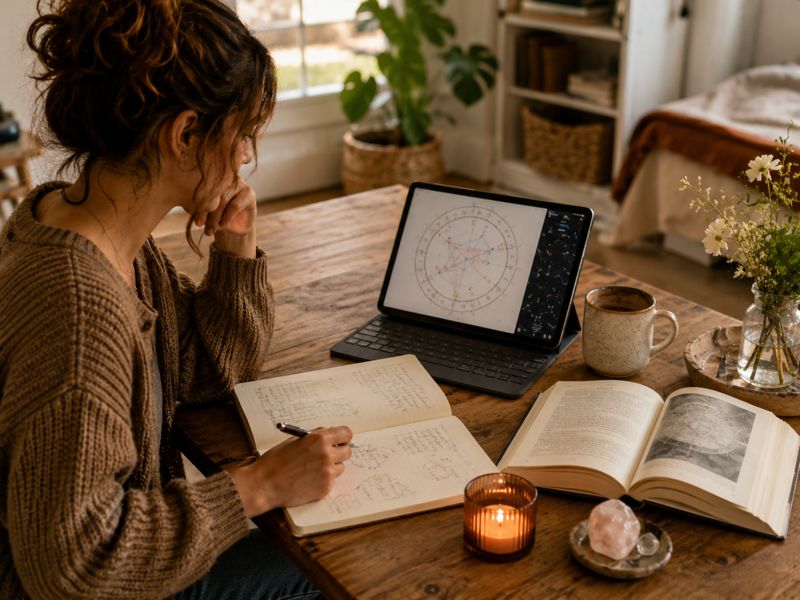
Astrology usually meets with scepticism, and that’s reasonable. If you took an hour to thoroughly analyse your birth chart instead of reading a three-line horoscope, your impression would be completely different.
Astrology platforms such as Nebula offer detailed, personalized readings that go far beyond sun signs, touching on how you process emotions and what conditions help you grow.
Using your birth chart as a tool for reflection, you’ll gain the words to describe things you may have felt about yourself for years but could never quite put your finger on. That alone can be worth a great deal.
Pick up a pen
Journaling has a bit of an image problem, it sounds like something that requires a beautiful notebook, a quiet Sunday morning, and a lot of uninterrupted time, none of which most parents have in reliable supply. The reality is far less precious than that. A few lines scribbled before bed, a messy brain dump on the back of an envelope, or even a voice note you transcribe later – all of it counts.
The NHS highlights reflective writing as a genuinely effective mindfulness practice, and the science behind it is straightforward: getting thoughts out of your head and onto a page reduces their grip.
Read with intention
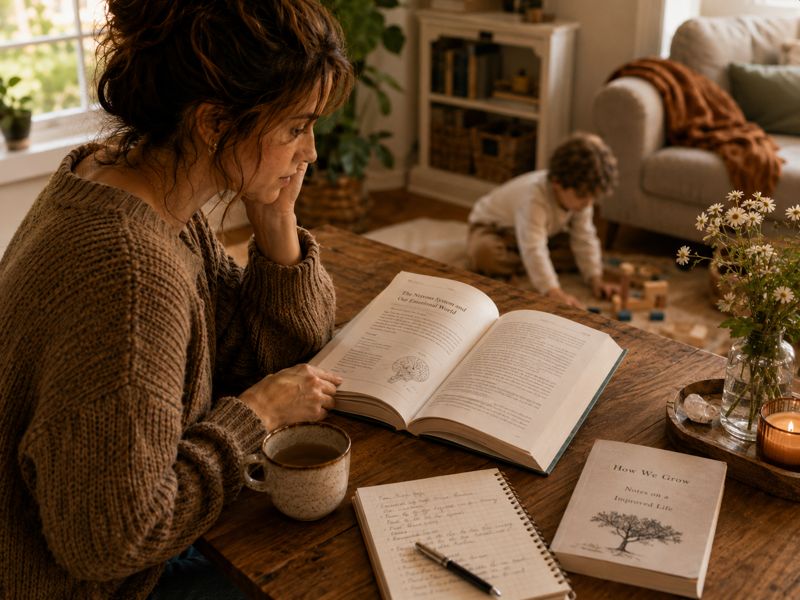
Most people who read regularly already know it’s good for them, but the type of reading makes a difference. Swapping one novel a month for something on psychology, behaviour, or personal development doesn’t mean giving up fiction altogether; it just means being a bit more deliberate about the mix. Psychology Today is well worth bookmarking alongside your reading list.
Their features on topics like emotional regulation, self-worth, and family dynamics are written accessibly and updated regularly. The knowledge you pick up tends to surface at surprisingly useful moments: mid-argument, mid-decision, mid-doubt.
Make space for the spiritual
Spirituality means different things to different people, and it doesn’t require any particular belief system to be useful. At its core, it’s about developing a relationship with the parts of life that don’t fit neatly into a to-do list.
If you’re curious about that dimension of self-discovery, it’s worth taking time to explore the different spiritual meanings behind recurring experiences, dreams, or symbols, whether through reading, meditation, or even a session with a psychic or spiritual advisor who can offer a fresh perspective. Many people find that paying attention to these things brings a sense of depth to daily life that’s hard to come by through practical tools alone.
Find your people

Community rounds all of this out, and it’s the tool that tends to get underestimated most. Not necessarily therapy groups, though those have real value, but simply finding other people who are also interested in growing, questioning, and being honest about where they are at.
It’s also worth carving out regular time for yourself within that, something we explored in our guide to how to spice up a self-care night in, which pairs well with any new practice you’re trying to build. When you’re around people who take their own development seriously, it normalizes the idea that you’re allowed to take yours seriously too.
Go at your own pace
One final thing worth remembering is pace. A culture of personal growth can carry an implicit pressure to progress, optimize, and constantly move forward. For those already managing a household, a career, and a family, that pressure is the last thing they need.
What actually works is gentler than that, returning to a practice after you’ve abandoned it for three weeks without making it mean anything, noticing a pattern in yourself without immediately trying to fix it, staying curious rather than striving for some imagined version of yourself that is finally, perfectly sorted. None of us is sorted. So, are we paying more attention than we used to? That, on its own, changes quite a lot.