
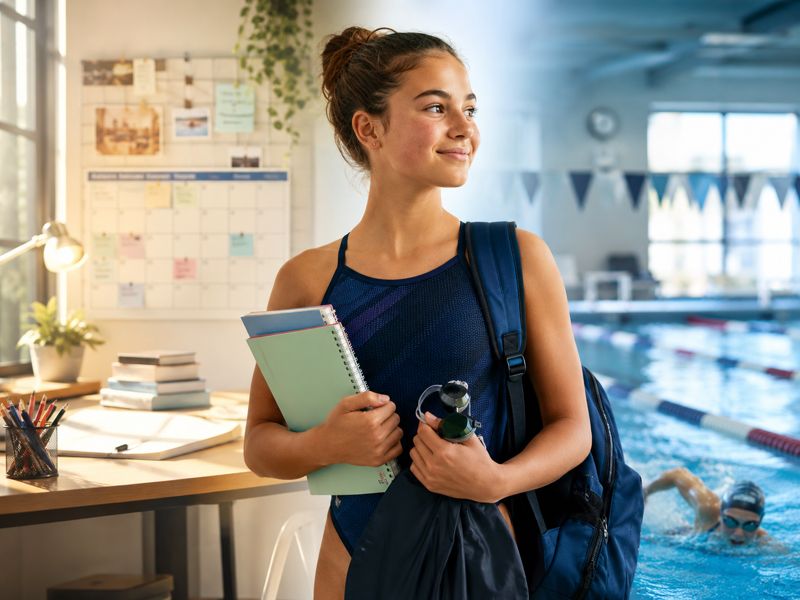
The NHS is of the opinion that kids should get about 60 minutes of activity a day. My eldest laughs in the face of that number. Between swim club, Saturday galas and whatever new obsession has taken hold that term, she’s moving more before breakfast than I manage to do in a week.
It is brilliant, obviously, watching her love something enough to get up at 6am for the sessions voluntarily, but it has also made me realise how the average school day wasn’t built with a kid like her in mind. Term time assumes that everyone will arrive at 8.45am, study for six hours and then go home. Sadly, sport doesn’t fit into that sort of timetable.
When the Timetable Doesn’t Work
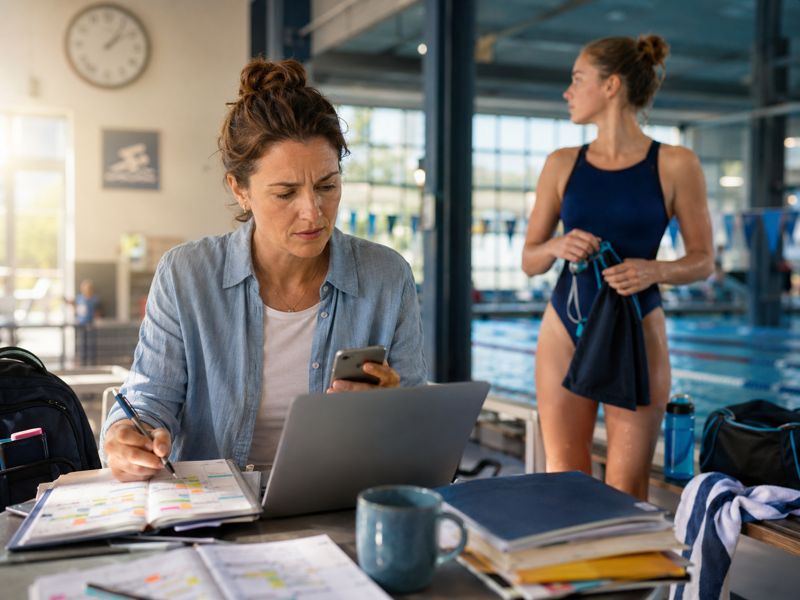
The cracks show up slowly at first, beginning with a note to the teacher explaining a late arrival after an early session. Then it is a missed afternoon for a regional qualifier, or a whole week away at a training camp. Suddenly, you are the parent chasing homework over WhatsApp from a poolside café somewhere random.
I have talked to a few other sport parents at galas about this and nobody has landed on the same answer when it comes to what to do. Some stick with mainstream school and just absorb the chaos, whilst others go the flexi-schooling route, which the Department for Education has actual guidance on if you want to see what is and isn’t allowed.
The Options We’ve Weighed Up
Flexi-schooling sounded appealing, given the mix of normal schooling and home education that would fit around training. The problem is that it depends entirely on your individual school agreeing to it and plenty don’t have the capacity to do so.
Home education on its own felt like a bigger leap than I was ready for, mostly because I know myself and structure is not my strong suit.
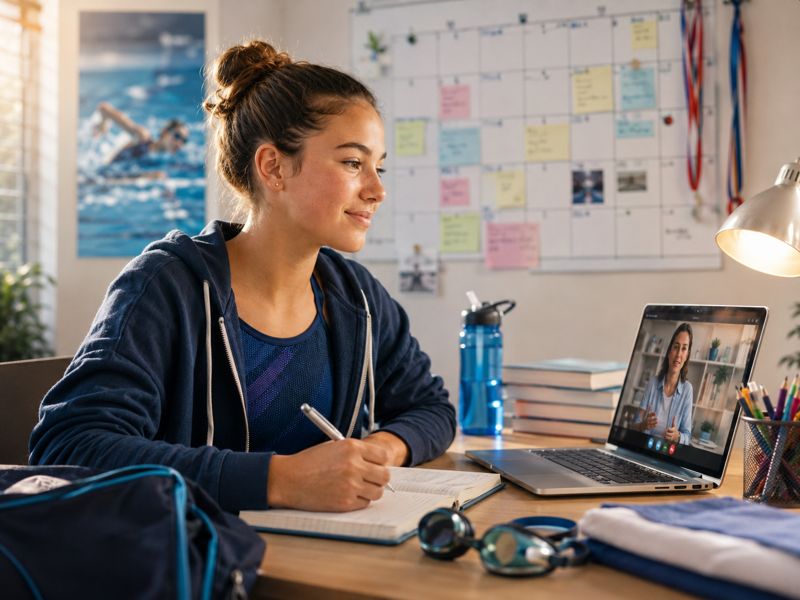
What caught my attention more were the online schools that are built specifically around young athletes, rather than trying to bolt sport onto a normal timetable. Minerva Virtual Academy is one that I kept coming back to whilst reading around this, as it is a DfE-accredited school for 11 to 18-year-olds where lessons are recorded.
That means that a missed class for a competition doesn’t result in a topic being missed altogether. GCSEs and A Levels run alongside one-to-one mentors, with support built in for things like sports psychology and nutrition, which is not something the average school pastoral team is set up to cover.
It is the mentoring side that stands out to me more than the flexibility, if I’m honest. The Youth Sport Trust has written a fair bit about how much young athletes are juggling before they even sit an exam, so having someone to track both the school side and the training side seems like it would take a lot of the mental load off both kid and parent, which is ideal.