

A first long-haul holiday with children is rarely stressful because of the destination. It is the flight, the transfer, and the first day when nobody has slept.
Mauritius copes with that better than its honeymoon reputation suggests. The trick is planning a family trip to Mauritius in a different order from most people.
Pick the days out before the hotel. Work out which of the things to do in Mauritius suit your children’s ages, then choose a coast that puts those within half an hour of the room. It sounds backwards, and it is the decision that saves the most arguing later.
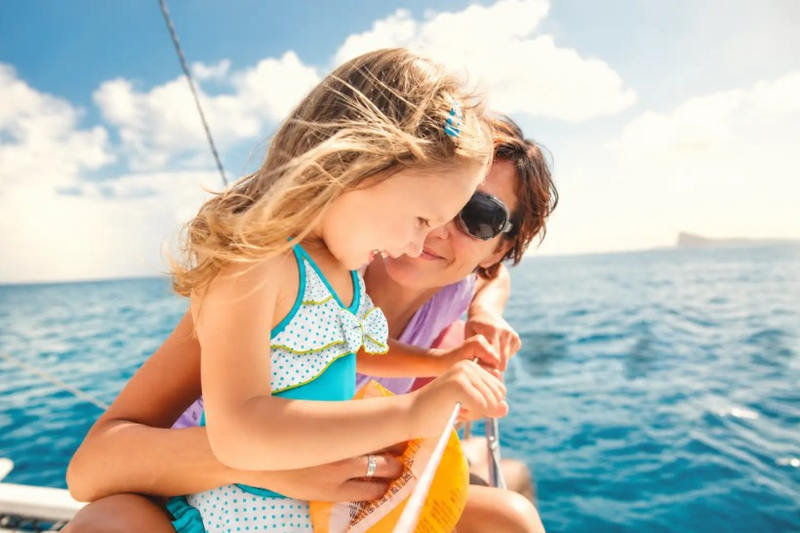
Then decide how much of the week belongs on the water. A full-day catamaran cruise in Mauritius runs to about seven hours and costs around 55 euros for adults and 35 for children, roughly £47 and £30. That is good value at eight years old and a very long sit at three. Shorter sails start at around 19 euros, which is the version that works with a toddler on board.
Choosing a coast when planning a family trip to Mauritius
Mauritius is small. Nothing is more than roughly ninety minutes from anywhere else, so you are never committing to a long drive with a tired child in the back. The coasts are still genuinely different, though, and a hotel chosen purely on photographs can leave you forty minutes from everything you wanted to do.
The east is the quiet side. Belle Mare has wide beaches and water that stays shallow a long way out, and it puts you close to the island’s water park and the boats across to Ile aux Cerfs. The north, around Trou aux Biches and Grand Baie, has restaurants and shops you can walk to, which matters far more with teenagers than with a three-year-old. The west, around Flic en Flac, has the calmest water and the best sunsets, with the big wildlife park about fifteen minutes inland. The southeast is quieter again, and Blue Bay is only fifteen to twenty minutes from the airport, which makes it a sensible first or last night.
The reason any of this works with small children is the reef. A coral reef runs almost the whole way around the island, so the lagoon inside it is shallow, warm and flat. Children can stand up a long way from the shore on most beaches, and the water sits at around 25 degrees even in the cooler months.
Getting there, and getting through the first day
It is eleven to twelve hours from London, and Mauritius is only three to four hours ahead of the UK depending on the time of year, so there is no real jet lag waiting at the other end. The flight itself is the hard part. With children under five it is worth booking ten nights rather than seven, simply so the journey is a smaller share of the holiday.
Book a private transfer rather than a hire car for a first trip. Driving is on the left, which helps, but the roundabouts and the local driving style take a few days to read, and doing that straight off a night flight is not the moment. A private car to the east coast costs from around 45 euros and a people carrier from around 65 euros, roughly £39 and £56. Child seats are usually free, but they get fitted before collection, so give the ages when you book rather than on the day.
Then keep the first day empty. Not lightly planned. Empty. The lagoon and a long lunch will do more for everyone than the attraction you felt obliged to book.
Matching the days out to your children’s ages
This is the part most guides skip, and it is the part that decides whether a day works.
Under-fives need short and shaded. The aquarium in Port Louis, the botanical garden at Pamplemousses and the smaller museums all run to about two hours, which is roughly the attention span you are working with, and they cost between 8 and 28 euros a head. The glass-bottom boat at Blue Bay, around 18 euros, is the one boat trip worth booking at this age. It lasts an hour, and nobody has to get wet.
Four to eight is the sweet spot for the wildlife parks. The safari drives, the playgrounds and the walk-through enclosures all land well, and there is enough space to fill five hours without route marching anybody. Expect around 30 euros a head for a full park day.
Nine and up is where the water park starts to earn its 49 euros for adults and 39 for children, roughly £42 and £34. Below about eight, it is a pool day with slides attached. From nine, it becomes the thing they talk about on the flight home.
Teenagers want to do rather than look. Snorkelling, kayaking, the underwater scooters and the full-day catamaran with a barbecue on board all work, mostly because they come with an afternoon on a beach of their own. It is the same thing that makes Salou work with teenagers somewhere to go that is not with their parents.
As a rough budget, a family of four doing one paid activity will spend somewhere between 120 and 150 euros a day, roughly £103 to £129. Plan two or three paid days across a week rather than one every day. The beaches cost nothing, and children rarely tire of them.
Packing for a lagoon rather than a beach
Water shoes. There are sea urchins on the rocky patches almost everywhere on the island, and a cheap pair per child is the single most useful thing in the suitcase.
After that: reef-safe sun cream, because parts of the lagoon are a protected marine park and the local shops charge a premium for it; long-sleeved rash vests, which work better than reapplying cream to a wriggling child every hour; and a light rain jacket if you are travelling between January and March. It does rain in those months, usually hard and usually for an hour rather than a day. The mistake is having nothing planned for those afternoons. The museums, the aquarium and the covered parts of the water park all carry on regardless.
Formula, nappies and baby food are sold in the supermarkets, so there is no need to fill a case with them. Most of the larger hotels have cots and high chairs, and a kids club taking children from around three to eleven.
Building a week that leaves room to do nothing
If you want a template, this is the shape that tends to hold up. Arrive and do nothing. Second day on the beach outside the hotel. Third day: a wildlife park or the aquarium, depending on ages. Fourth day: free. Fifth day on the water, a half-day sail for the little ones or the full island hopping trip for older children. Sixth day: the water park if anyone is over eight, the lagoon again if not. Last day somewhere near the airport, which usually means Blue Bay.
Four moving parts, three of them paid, and nothing that needs a seven in the morning start. Overall, that is the difference between coming home rested and coming home needing another week.
Before booking anything, check the current entry and passport rules on the UK government’s Mauritius travel advice page, as they can change between booking and flying.