
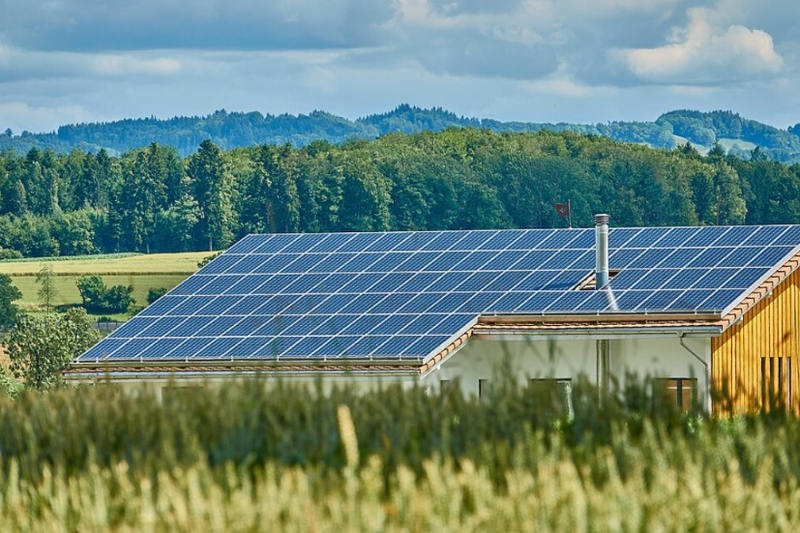
Commercial solar panels allow a business to generate a portion of its own electricity during daylight hours, reducing the amount of power it needs to buy from the grid at commercial rates. Businesses with high daytime energy usage, such as retail units, offices and manufacturing facilities, are typically well placed to benefit from this kind of self-generated power.
Accredited suppliers such as SM Electrical Services design and install commercial solar PV systems tailored to a business-specific energy consumption pattern, working to MCS-certified and NICEIC-approved standards.
Why Daytime Energy Use Determines How Much a Business Can Save
A business that consumes most of its electricity during the working day, such as a retail outlet, office, or manufacturing facility, is generally well positioned to benefit from solar panels, since the energy generated closely matches when it is actually used. Businesses that operate mainly at night, such as certain distribution hubs or hospitality venues, still benefit from solar but typically see greater advantage when the system is paired with battery storage to shift daytime generation to evening use.
Understanding a business’s own consumption patterns, rather than assuming solar benefits every business equally, is the starting point for determining whether an installation makes financial sense. This is why a proper energy assessment forms the first stage of any commercial solar project rather than a generic quote based on roof size alone.
What a Commercial Site Survey Actually Assesses
A commercial site survey assesses roof space, shading from nearby buildings or structures, and the roof’s structural integrity to confirm it can safely support the weight of a solar array. The survey also reviews the business’s annual electricity consumption pattern, examining when and how much power is used across a typical day and year to inform the subsequent system design.
For businesses considering both flat and sloped roof options, the survey will assess which mounting approach best suits the specific building, as flat roofs typically require additional mounting structures compared to sloped roofs. This detailed assessment stage is what allows a subsequent solar system design to be tailored rather than generic.
Designing a System Around Actual Consumption Patterns Rather Than Roof Space Alone
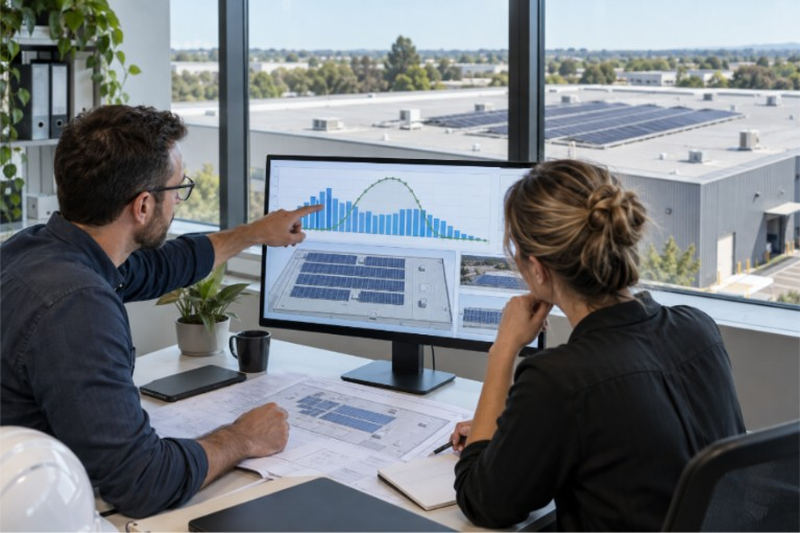
A well-designed commercial solar system is built around how much electricity a business actually consumes and when, rather than simply filling all available roof space with as many panels as possible. Installing more capacity than a business can use during typical operating hours does not necessarily improve the return on investment, since excess generation without adequate storage or export arrangements may not be used effectively.
Working from actual consumption data allows a system to be sized appropriately, balancing installation costs against the realistic savings a business can expect on its energy bills. This consumption-led approach to design is one of the main differences between a well-planned commercial installation and a generic one-size-fits-all quote.
Why Scalability Matters for a Growing Business
As a business grows, its energy needs are likely to change, whether through opening additional premises, increasing production, or introducing new energy-intensive equipment. A commercial solar system designed with scalability in mind allows additional panels or battery capacity to be added later without needing to replace the entire system from scratch.
This is particularly relevant for manufacturing facilities and industrial sites, where energy demand can shift significantly as operations expand. Discussing future growth plans with an installer at the design stage, rather than focusing solely on current energy needs, tends to produce a system that remains useful longer.
How Battery Storage Extends the Benefit Into Evening Hours
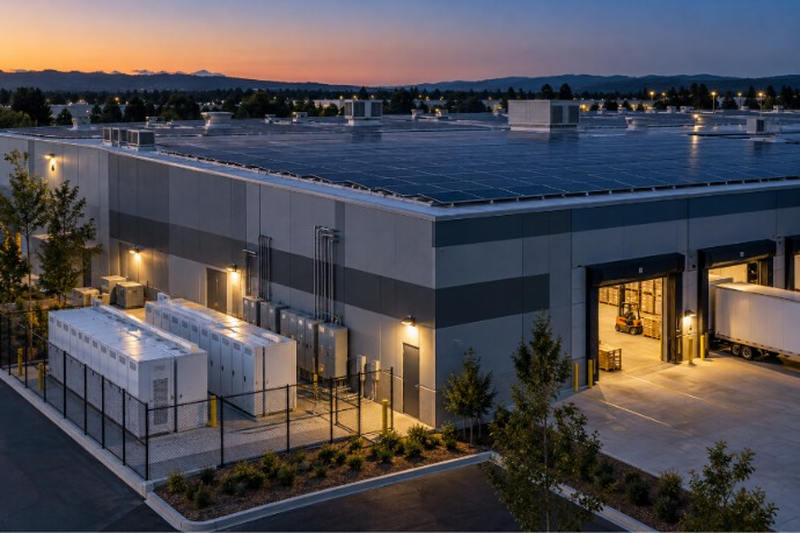
For businesses that operate outside standard daytime hours, or those that simply want to make fuller use of the electricity they generate, adding battery storage allows surplus daytime solar generation to be used later in the evening or overnight. This is particularly relevant for distribution hubs, hospitality venues and other businesses running extended or overnight operations, where energy demand does not align neatly with daylight hours.
Battery storage also provides a degree of operational resilience, since stored energy can act as a buffer during short interruptions to the grid supply. For a business evaluating the full potential of a solar installation, considering battery storage alongside the panels themselves tends to produce a more complete picture of the available savings.
What Accreditation Should Be Confirmed Before Signing a Commercial Contract
Before signing a commercial solar contract, a business should confirm that the installer holds MCS certification, since this reflects a recognised UK standard for renewable energy installations rather than a general electrical qualification alone. It is also worth checking for NICEIC-approved contractor status and compliance with BS7671 wiring regulations, both of which relate to the safety and quality of the electrical work.
Accreditations such as SafeContractor and HIES Consumer Code compliance provide further assurance around health and safety practices and consumer protection standards respectively. Confirming these credentials directly, rather than assuming every installer holds the same standards, protects a business from complications further down the line.
Treating Solar as a Long-Term Business Investment
Commercial solar panels represent a long-term investment in reducing energy costs and improving operational resilience. Still, the benefits a specific business sees depend heavily on its own consumption patterns and how the system is designed around them.
Trusted solar installers can design commercial solar PV systems based on a business’s actual energy usage, working to MCS-certified and NICEIC-approved standards across retail, office, and industrial-scale installations.