
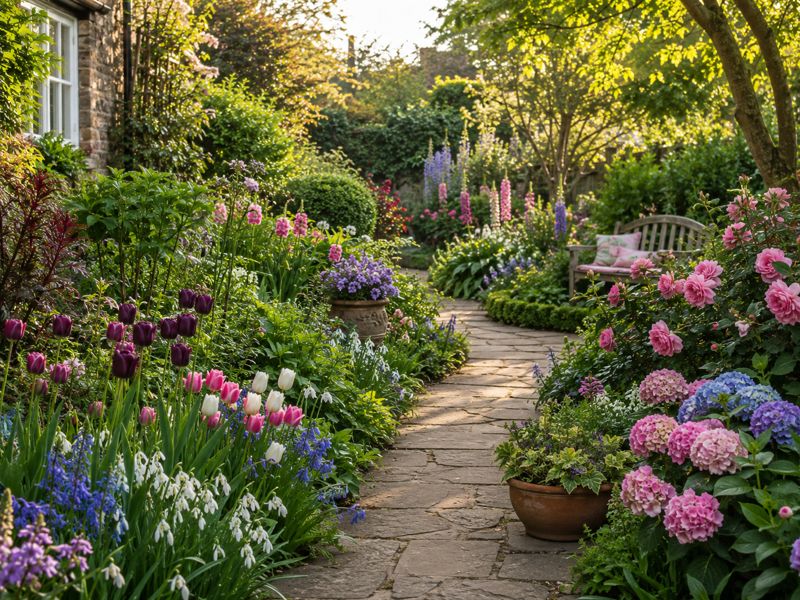
Summer is the most incredible time to own a garden – provided that you’ve done the necessary preparation and ensured that the ground is ready for all of the amazing flowers that will come to bloom at the same time.
Of course, the foundation for a successful summer is a successful spring, and in order to achieve that, you’ll need the right selection of early highlights. Tulip bulbs are a reliable favourite, since they tend to blossom well before everything else, and provide the space with those first splashes of floral colour.
From Early Colour to Fuller Growth
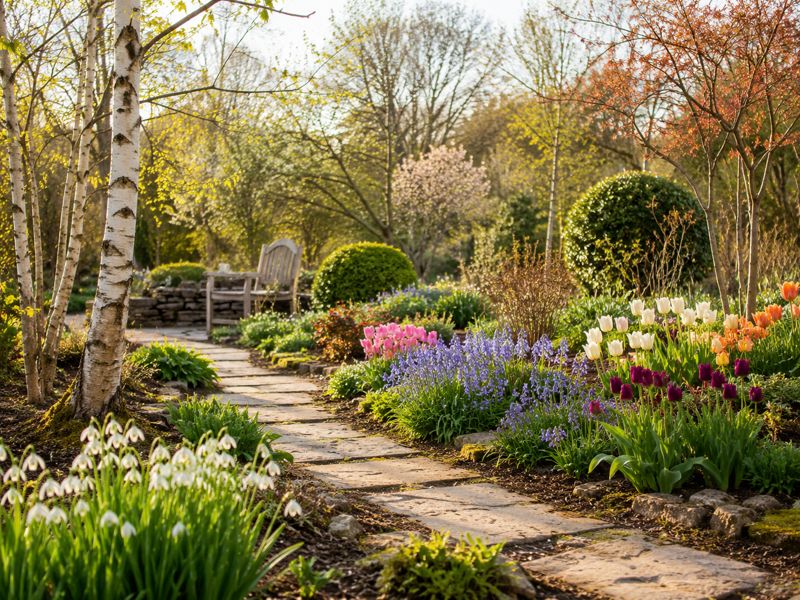
During spring, your plants might be relatively sparse. Therefore, choosing their locations wisely might provide you with the structure required to tie the space together and the room required for summer growth to really flourish.
There’s a natural reward behind all of this: if you get it right, then you’ll have an excuse to spend more time outdoors during warmer weather, which in turn can have a positive effect on your mental well-being.
You can usually spot the first signs of spring fairly easily. You’ll get leaves on alder, maple, and silver birch, and then buds on beech, oak, ash, and rowan. Snowdrops are typically followed by bluebells, and then tulips.
Managing the Transition Without Gaps
The good news is that plants don’t tend to bloom all at the same time, and so the character of your space will shift with the passing seasons. By picking them carefully, you’ll be able to ensure some overlap and that you’re never left with sparse periods.
Fading plants might be moved out in favour of later bloomers, and a combination of potted plants might be used to minimise the effort required to keep things constantly fresh.
Designing for Ongoing Interest
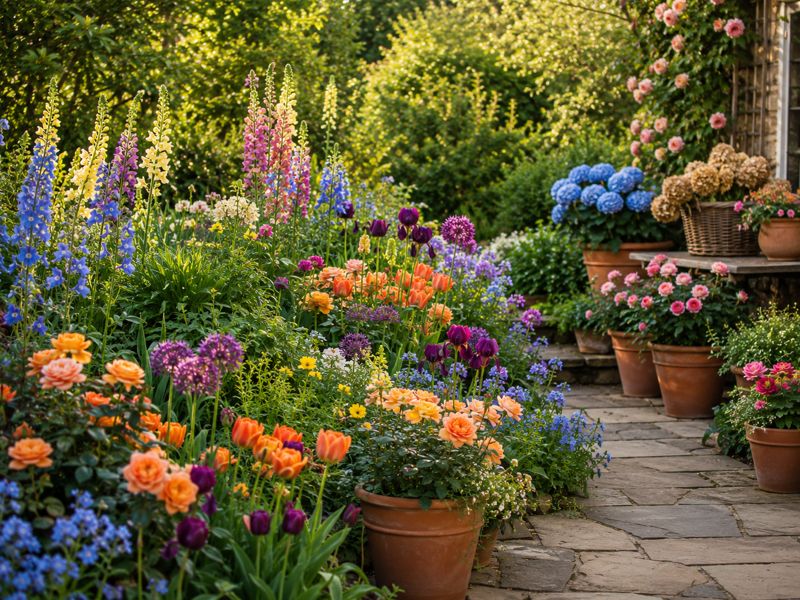
If you can plan your look ahead of time, you’ll be able to pick out complementary hues. Blues and deep oranges tend to work well together, as do deep purples and yellows. Familiarity with basic colour theory might allow you to combine the right textures and hues.
You might layer tulips with summer-blossoming roses and snapdragons, thereby ensuring that everything works together seamlessly. Roses are a great match for plant pots, in that they can be moved so that their thorns do not become an inconvenience. When winter rolls around, you can use dried hydrangea petals to create some truly evocative displays. Provided, of course, that you’ve managed to cultivate the flowers themselves during summer.
Creating a Garden You Can Enjoy Daily
Of course, the garden you put together should be designed to meet your own personal needs, rather than those of anyone else. Think about how you intend to use the space. Are you going to be reading, sunbathing, or playing games? How much maintenance can you commit to? What kinds of blossoms do you personally enjoy? The answers to these questions, and others, will help you to shape your garden in the right way – so make sure that you consider them!