
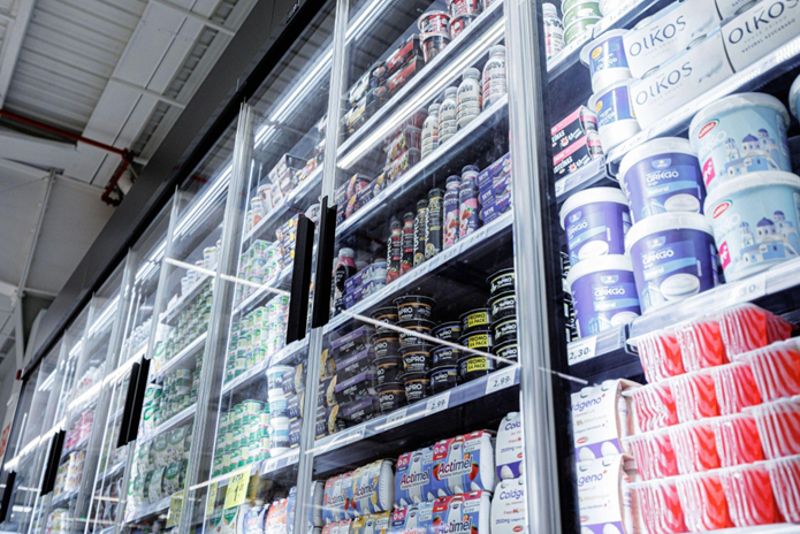
Maintaining the integrity of the cold chain from production facility to end customer is one of the most demanding logistical challenges facing UK food businesses, and specialist chilled delivery services like Run It Cool provide the temperature-controlled transport infrastructure that food producers, wholesalers, and retailers rely on to protect product quality, meet regulatory requirements, and build the confidence of their customers in the products they purchase.
What the Cold Chain Means for Food Businesses
The cold chain refers to the unbroken series of refrigerated production, storage, and distribution activities that maintain perishable food products within a specified temperature range from the point of manufacture or harvest through to the point of consumption. A break in the cold chain, even a relatively brief one, can accelerate bacterial growth, compromise product quality, and potentially create a food safety risk that results in product withdrawal, regulatory action, or reputational damage.
For food businesses, maintaining the integrity of the cold chain is not merely a matter of good practice but a legal requirement under UK food hygiene regulations, which place a positive obligation on food business operators to control temperatures throughout the supply chain.
The Regulatory Framework for Chilled Food Transport in the UK
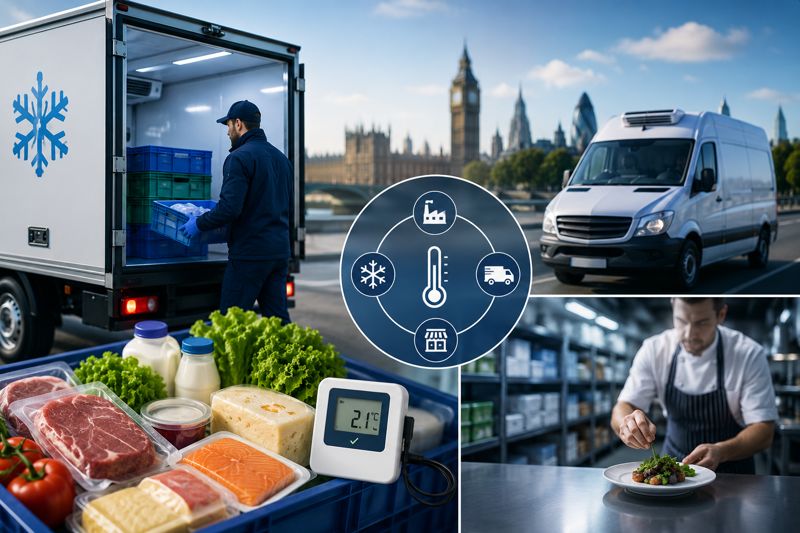
Food businesses transporting temperature-sensitive products in the UK are subject to a framework of food safety regulations that set out the required temperature controls for different categories of food. The Food Safety and Hygiene Regulations require chilled foods to be kept at 8 degrees Celsius or below, while frozen foods must be maintained at minus 18 degrees Celsius or below during transport.
The Regulation on Temperature Control Exceptions allows for short periods above these temperatures during loading, unloading, and local distribution, but these exceptions are limited and do not provide a general licence to allow temperature abuse. Food businesses are expected to document their temperature controls and to be able to demonstrate compliance with the relevant standards in the event of an inspection or incident.
How Specialist Chilled Delivery Services Maintain Temperature Standards
A specialist chilled food delivery service uses a combination of refrigerated vehicles, validated insulated packaging, and temperature monitoring systems to maintain the required product temperatures throughout each delivery journey. Refrigerated vehicles equipped with calibrated temperature management systems provide active cooling for ambient-temperature deliveries over longer distances, while insulated packaging with ice packs or phase change materials is used for shorter journeys where vehicle refrigeration is not required.
Temperature data loggers placed within consignments record the temperature conditions experienced during transit and provide documentary evidence of cold chain compliance that can be shared with customers and regulators. Regular vehicle maintenance and calibration of temperature monitoring equipment are essential to the reliability of the service.
Same-Day Chilled Delivery and Its Business Benefits
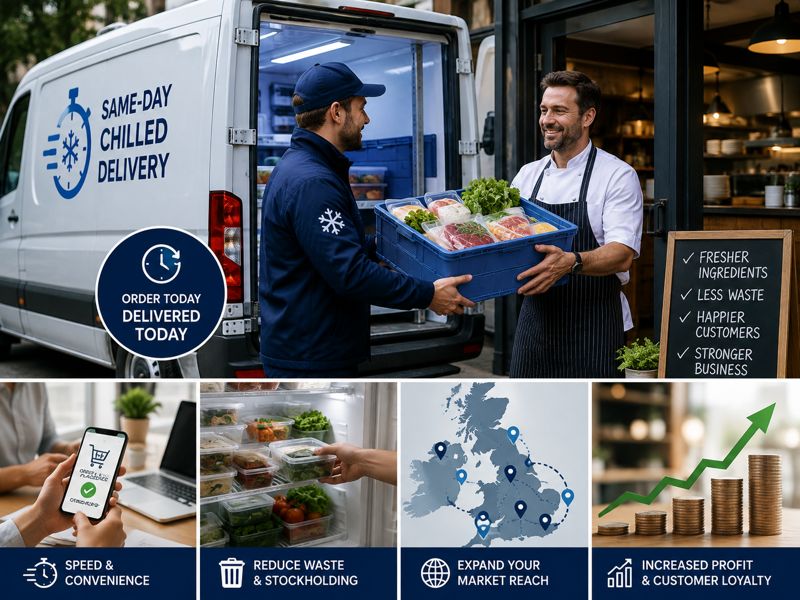
The ability to offer same-day chilled delivery to customers provides food businesses with a significant competitive advantage in markets where freshness and speed of supply are key purchasing criteria. Restaurants, catering operations, retailers, and food service businesses that can place orders in the morning and receive delivery on the same day are able to reduce their own stockholding, minimise waste from products held too long in store, and respond more flexibly to changes in demand.
For food producers and wholesalers, offering a reliable same-day chilled delivery service can open up new customer relationships and geographic markets that would not be practical to serve through conventional next-day or multi-day delivery schedules. The financial return on investment in a specialist same-day chilled delivery capability is often realised quickly through increased customer retention and the ability to command premium pricing for a genuinely differentiated service.
Managing Peak Demand and Seasonal Variation in Chilled Deliveries
Food businesses typically experience significant variation in delivery volumes across different times of year, with peaks around major holidays, seasonal product launches, and promotional periods creating spikes in demand that require flexible logistics capacity. A specialist chilled delivery service with appropriate vehicle capacity and operational flexibility can scale to meet these peaks without compromising on temperature standards or delivery reliability.
Planning and early communication between the food business and its logistics partner are essential to managing seasonal peaks successfully, particularly where specialist packaging materials such as dry ice or high-performance phase change inserts need to be sourced in larger quantities. Building a strong operational relationship with a chilled delivery specialist, rather than relying on ad hoc arrangements at peak times, provides the best foundation for consistent service quality throughout the year.
Selecting a Chilled Food Delivery Partner for Your Business
Choosing the right chilled food delivery partner requires assessment of both the technical capability of the service and the operational reliability that can be expected in practice. The prospective partner should be able to demonstrate validated temperature control systems, appropriate food hygiene certifications, and a clear understanding of the regulatory framework governing chilled food transport.
References from food businesses of comparable size and product type provide the most relevant evidence of service quality. The commercial terms of the arrangement, including pricing structure, minimum volumes, cancellation provisions, and the handling of claims for temperature-damaged goods, should be clearly set out in a written agreement before the service commences. A partner who is transparent about their processes and willing to provide temperature records and delivery confirmation as standard is likely to be a more reliable long-term logistics partner than one who is reluctant to share operational data.