
Do you remember Shpock? Me too! Do you still use it? No, me neither.
Back in 2018, Shpock had a bit of time in the sun. I can even remember a TV commercial so they must have been making a big push to get their brand out there. But then it seemed like a new online marketplace platform was coming out every 5 minutes, and Shpock’s weaknesses were revealed.
It was a good idea at the time, because it listed items based on their proximity to you. You would see the closest items first, so it was a local marketplace first and foremost, but could also be used to find things further afield. This was the opposite way round to eBay, which worked as a nationwide marketplace first, whilst allowing users to filter their searches for more local items.
Back in the early days, the deal was made on Shpock, but payment was handled in person. It made sense since it was designed to be a local marketplace. You would use the app to find someone a few streets away who was selling a kids bike, or an electric fireplace, or whatever, drive over and complete the deal. They integrated Paypal soon after I joined, but it was still essentially an out of app payment.
People called it a digital car boot sale, which was a decent description.
It had its flaws though, and as other online marketplaces upped their game, Shpock was left behind. My first deal on there was in 2018, my last was in 2021. But I remembered Shpock the other day and logged in to see what had changed, and to see if anyone still used it.
I didn’t like what I saw.
Payment and Buyer Protection: No More Shpock Wallet
I can remember Shpock introducing the Shpock Wallet back when I was still using it. This was a way to make it safer to buy and sell from people elsewhere in the country.
The buyer would pay the money into the seller’s Shpock Wallet where it would stay in a ‘pending’ state, the seller would send the item via whatever courier they chose, then the buyer would tell Shpock it had been received, and Shpock would release the money from ‘pending’ so the seller could withdraw it. It wasn’t completely fool proof, issues could still arise if a buyer claimed the item didn’t show up, or wasn’t as described, but there was some buyer protection there.
But the Shpock wallet has now been ditched, and the platform has reverted back to a ‘sort it out yourselves’ model. This means buyer protection has essentially gone with it. Shpock even say they can’t do anything if, for a example, a privately arranged Paypal deal goes wrong. They are literally just a digital classifieds page.
So you have to chat in app about the price, who pays for delivery, which courier you are both happy with, then confirm the deal. You then have to give out your address in a private conversation and hope the other person is a decent human being and not a time waster or a chancer.
This leaves Shpock in a sort of no mans land, in terms of its USP. It’s not quite the Wild West that Facebook marketplace is, but it’s definitely not on the same level as more professional resale platforms like Vinted, Depop, and eBay.
Selling is Not Free
Selling used to be free. You could pay to promote your listings if you wanted to, or to remove ads (adverts have always been one way Shpock make money), but you could use the platform entirely for free if you wanted to.
This is no longer the case. Shpock is not free to sell on any more.
They now have two levels of membership, making it a subscription based service for sellers. And alright, the fees aren’t much, but if you only want to sell a few low value items it makes the platform a bad choice.
Standard Membership: £0.99 per month
- Unlimited listings in ordinary Shpock categories
- No advertising in the app or on the website
- Membership badge displayed on your profile
- Does not include listings in the premium categories like Cars, Property and Services
- Standard listings normally remain active for 30 days
Premium Membership: £4.99 per month
- Unlimited listings in ordinary categories
- One active listing in each premium category: Cars, Property and Services (additional listings in these categories cost extra)
- No advertising
- Membership badge
- Up to 20 photographs per listing
- Listings remain active for 90 days
- Two free listing promotions each month, which Shpock says can produce up to 12 times more views
- Priority support, with replies promised within three business hours
So for sellers, you either need to be selling frequently, or be doing a big clear out to make it worthwhile. And with better platforms out there that are free, or at least come with more protection, why would you choose Shpock?
The membership renews automatically each month too, so it’s the kind of thing you could easily forget about.
Scammers. Scammers Everywhere
I checked Shpock’s Trustpilot reviews and it had an average of 1.7 stars (as of July 2026). That’s not good.
One of the most common things that came up in those reviews, was the number of scammers on the platform. Now, this was a problem even back when I was using Shpock, so the fact that they have not only failed to sort it out, but that it has got worse, is terrible.
Getting rid of the Shpock wallet almost certainly made it worse.
Scammers can open and close accounts all day if they want to. They get in touch, contact as many people as possible, ask to take the deal to email rather than in the app, and complete the scam from there. One article I read explained they had six offers with the hour for an air fryer they were selling as a test, and all of them were scammers.
This, added to the issues above, explains why very few people still use Shpock these days. I searched for a kids bike, an iPhone, and ‘Xbox’ – there were fewer than 10 listings within a 10 mile radius for each. The next closest were miles away.
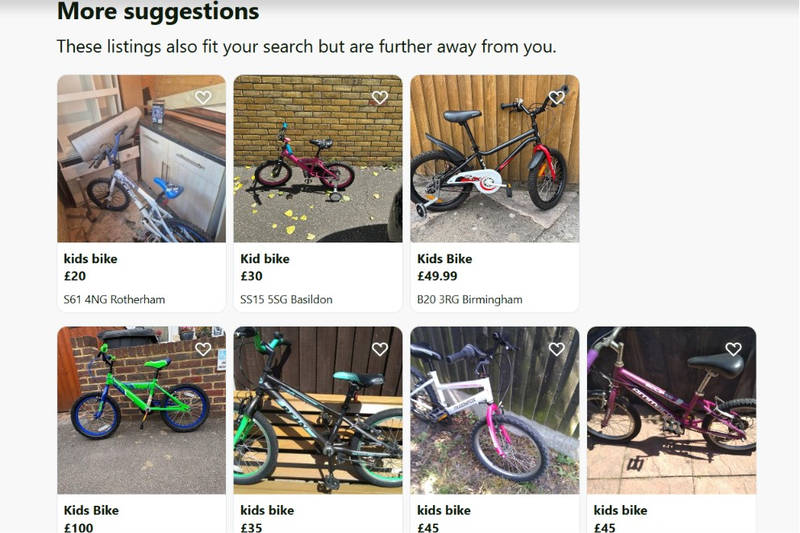
I’m not far from Manchester, a big city, so it will likely be even worse in small towns. It never used to be this barren, which tells you all you need to know.
So, does anyone still use Shpock? Nope. Is it any good? Also nope. Sorry.