
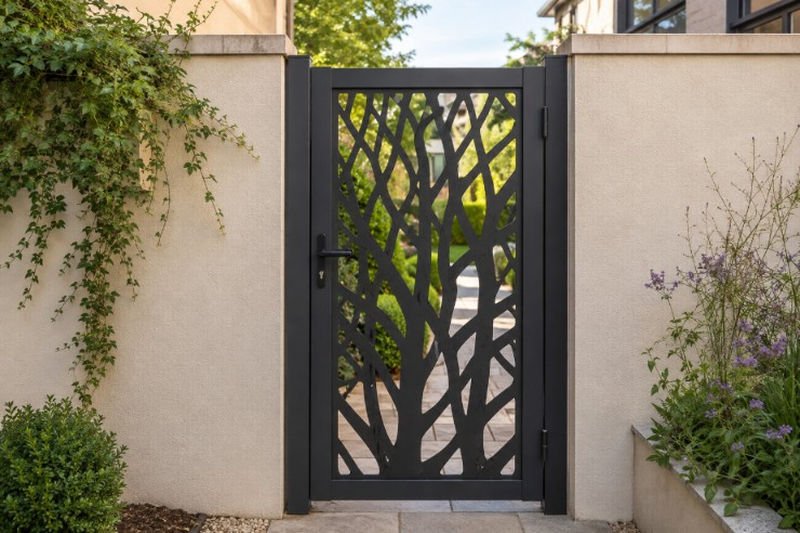
Buying a gate for your home might seem straightforward, but the range of materials, styles, and suppliers now available means that doing it well requires a little research. Bespoke composite screen gates in particular represent a significant step up from off-the-shelf timber options, offering a level of finish and longevity that is well suited to modern homes.
Suppliers like Aluminium Gates have built a strong reputation for producing made-to-measure composite gates that meet the specific requirements of individual properties, and understanding the buying process makes it easier to get the result you are looking for from the outset.
Why Bespoke Matters More Than You Might Think
Standard gate sizes are designed to fit typical openings, but most driveways and garden entrances deviate from the standard by at least a few centimetres. A gate that does not fit its opening properly will always look slightly wrong, regardless of the quality of the material or the finish.
Bespoke manufacture solves this by producing the gate to your exact measurements, including any gradient compensation if the ground is not level. The result is a gate that closes cleanly, sits flush within its posts, and looks as though it was designed specifically for the space, because it was.
Understanding Composite as a Material
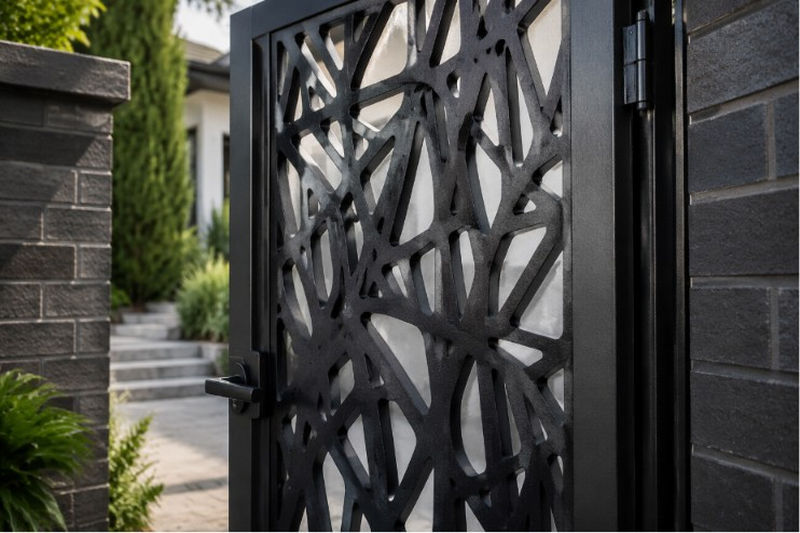
Composite is a broad term that covers a range of engineered products, but in the context of gates and fencing it typically refers to boards or panels made from a combination of wood fibre and thermoplastic polymers. The proportion of each component affects the performance characteristics of the finished product, including its rigidity, colour stability, and resistance to moisture.
Higher grade composite products use a higher proportion of encapsulated wood fibre and a more consistent manufacturing process, which results in better dimensional stability and a more realistic timber appearance. When evaluating suppliers, asking about the specific composite specification being used is a reasonable and worthwhile question.
Colour and Finish Selection
One of the most enjoyable parts of the bespoke buying process is selecting the colour and finish that will best complement your property. Contemporary composite gates are available in a wide spectrum of colours, from classic natural oak and mahogany tones through to bold anthracite greys, jet blacks, and painted finishes that can be matched to window frames or front door colours.
The finish is typically a co-extruded outer layer that is applied during manufacture rather than painted on afterwards, which means it is integral to the board structure and far more resistant to fading and chipping than a surface-applied paint finish.
Hardware and Automation Options
The gate itself is only part of the overall installation. Hardware choices including post caps, hinges, latches, and locking mechanisms contribute significantly to the final appearance and security of the finished gate.
For driveway gates in particular, the option to add electric automation is worth considering at the design stage, since retrofitting a motor to a gate that was not designed for it is significantly more complicated than specifying the automation as part of the original order. Automated gates add considerable convenience for households with multiple vehicles and can also improve home security by removing the need to exit the car to open and close the gate.
What to Ask Your Supplier Before Ordering

A reputable composite gate supplier should be able to answer several practical questions clearly and without hesitation. Ask about the specific composite product being used and its guarantee period. Ask whether the quoted price includes delivery and installation or whether these are costed separately.
Ask how the gate is finished at the edges and whether any cut ends are sealed to prevent moisture ingress. Ask for references or recent installation examples in your area. These questions are not unreasonable, and any supplier who is reluctant to answer them in detail should be treated with caution.
The Long-Term Value Perspective
A bespoke composite screen gate is not the cheapest option available, but when the cost is spread across its likely service life, the value proposition becomes clear. A well-made composite gate installed correctly should perform without significant maintenance for twenty years or more.
Compare this to a painted timber gate that requires stripping, treating, and repainting every three to five years, plus the periodic replacement of deteriorated timber sections, and the composite option often works out considerably more economical over time. The initial outlay is higher, but the ongoing cost of ownership is substantially lower.