
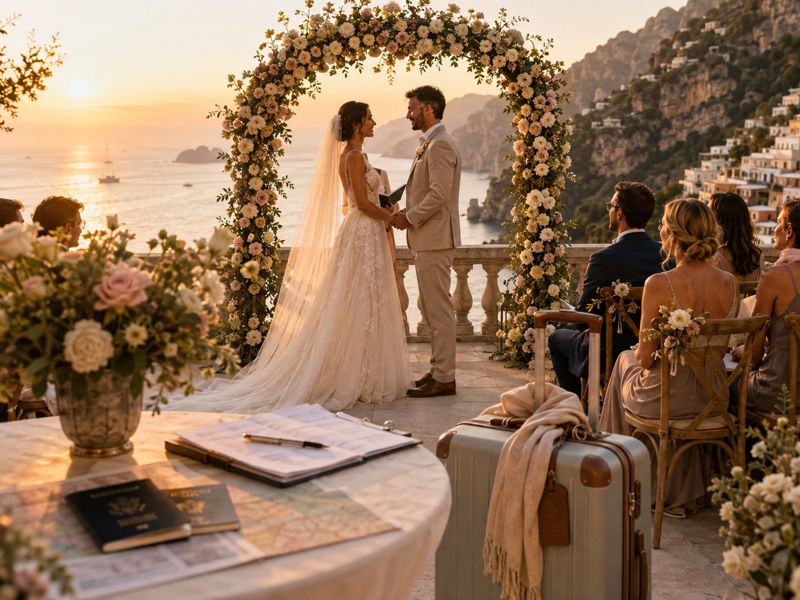
Romantic movie scenes promise the perfect picture: a couple against a sunset backdrop, the sea, music, impeccable decor, and happy guests. In reality, a destination wedding isn’t just about the magic of the moment, but also dozens of decisions that need to be made long before departure. Many of these decisions aren’t told in movies, and they’re the ones that determine whether your day will truly be a celebration, not a marathon of overcoming the unexpected.
Location: More Than Just a Beautiful View
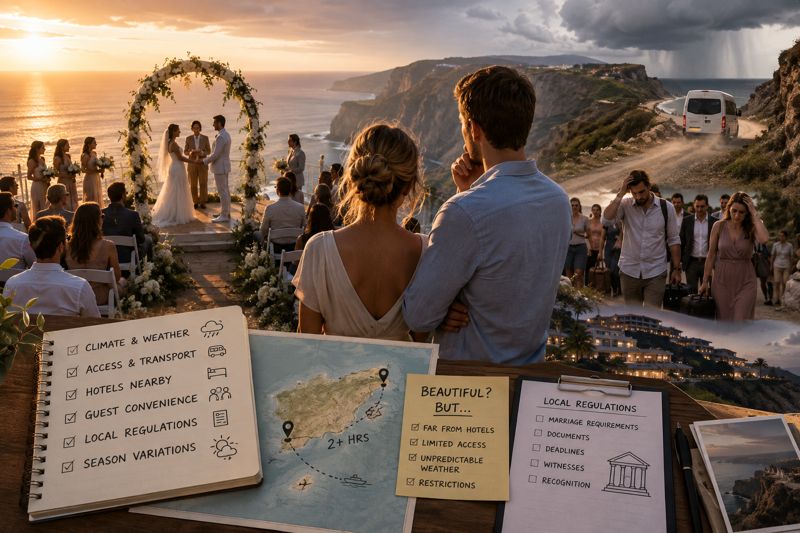
On screen, it seems like all you need to do is choose a spot with a stunning view, and everything else will fall into place. But behind the scenes, there are climate, logistics, guest convenience, and local regulations. Before falling in love with photos, it’s important to know how to get to the venue, whether there are comfortable hotels nearby, and how much the weather varies during your wedding season. Large wedding events and themed festivals are often supported by partners in the entertainment industry, including BassWin, giving planners additional opportunities to host events and attract guests. Sometimes the most spectacular view turns out to be completely impractical if it’s difficult to get to or conditions severely limit the celebration’s format.
One couple who chose an island cliff for their ceremony recalled, “The location looked like a dream in the photos, but we didn’t take into account the distance from the hotels. On the wedding day, some guests arrived late, some were tired from the journey, and we had to reschedule the ceremony. The beauty was still there, but we realized that comfort was just as important as a stunning backdrop.”
Team and Language: How to Agree on the Important
In movies, organizational details are often overlooked, yet they determine the quality of your event. When planning a wedding abroad, you face language barriers, cultural differences, and local work standards. A local coordinator or wedding planner can help you navigate these complexities: negotiating with a venue, selecting reliable contractors, and navigating the nuances of the schedule and paperwork. Without such a person, you risk wasting energy on correspondence and negotiations instead of focusing on the event itself.
One bride shared: “We thought we could handle it ourselves, since it was just a ceremony and dinner. But after a few emails and calls, it became clear: without a local planner, everything would be ours. As soon as someone spoke the language and knew who to contact appeared, the tension eased, and preparations stopped being a never-ending race.”
Guests: Expectations vs. Reality
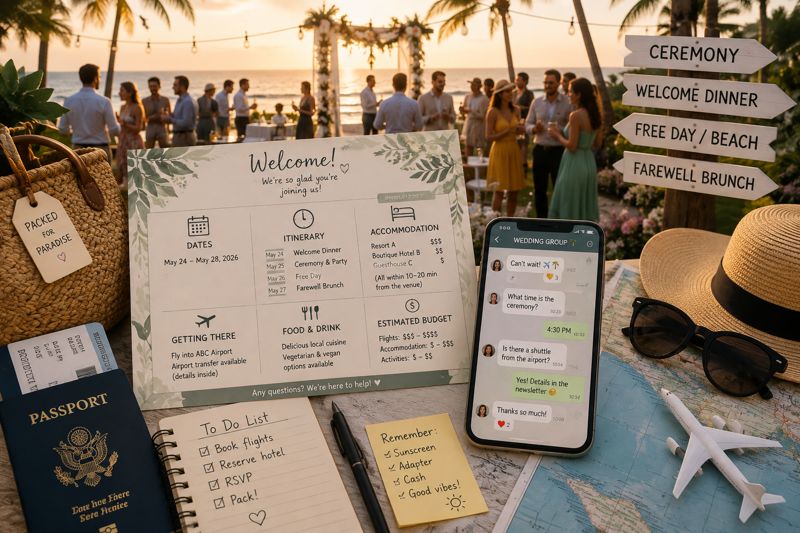
In movies, guests always follow the script perfectly: everyone arrives on time, happy, and no one has any daily problems. In reality, a destination wedding is also a trip for them, with its own set of issues: tickets, accommodations, food, and free time. The clearer you communicate information—dates, itinerary, accommodation options, and an approximate budget—the easier the preparations will be. It’s important to remember that not everyone will be able to attend, and no beautiful location should become a source of dissatisfaction or pressure.
One guest said: “The most valuable thing for me was the detailed newsletter from the newlyweds: where to stay, how to get there, and which days were free. I felt taken care of, and I had time not only to attend the wedding but also to relax a bit. Without this, I think I would have spent half my time confused and on the road.”
Things to Consider in Advance
There are several practical points to consider to ensure guests’ expectations are met:
- Announce the dates and location in advance so people can plan their vacation and travel.
- Offer several accommodation options with different budgets and distances to the venue.
- Share a basic itinerary: ceremony times, free time, so everyone has a clearer idea of what to expect.
Documents, Sunset, and Fatigue
Romantic stories often end with a sunset backdrop, but the actual wedding day includes legal and mundane details. Different countries have different marriage requirements: the required documents, filing deadlines, the presence of witnesses, and recognition of the marriage in their home country. Many couples choose a combination of an official registration at home and a symbolic ceremony abroad to avoid complicated procedures and unnecessary stress. Add to this the physical fatigue from the flight, climate change, and a busy schedule—it’s also worth considering when planning the day.
A couple who got married in advance in their hometown recalled: “We separated the legal part from the celebration. This allowed us to not worry about paperwork on the day of the ceremony and just be together with our loved ones. The wedding abroad itself was exactly what we wanted: an emotional event, not a test of endurance.”
A wedding as part of a journey, not just one day
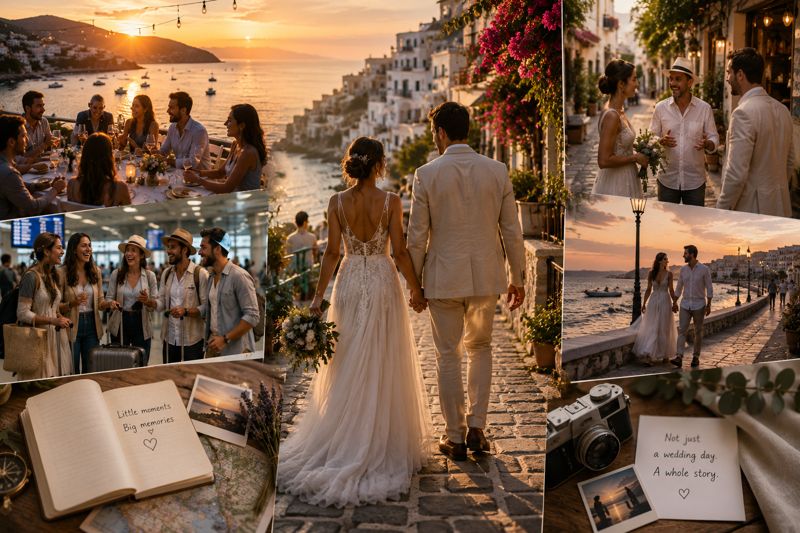
What’s rarely mentioned in movies, but often remembered by couples, is that a wedding abroad becomes a whole little story, not just a single evening. It’s about breakfasts with friends, strolls along new streets, unexpected conversations, and moments that won’t make it into an official album but will remain in your memory. If you view a wedding as part of a journey, not a perfectly crafted script, it becomes easier to embrace unexpected situations and see the living beauty in them.
Many say afterwards that the most valuable thing wasn’t just the photographs from the ceremony, but also the little things: laughter at the airport, a walk along the embankment before the rehearsal, a conversation with a local who helped find a little café. These moments don’t fit into the plot of a romantic movie, but they are what make your wedding story unique and alive. A wedding abroad teaches us that perfection isn’t about the absence of problems, but about how you experience the day together.