
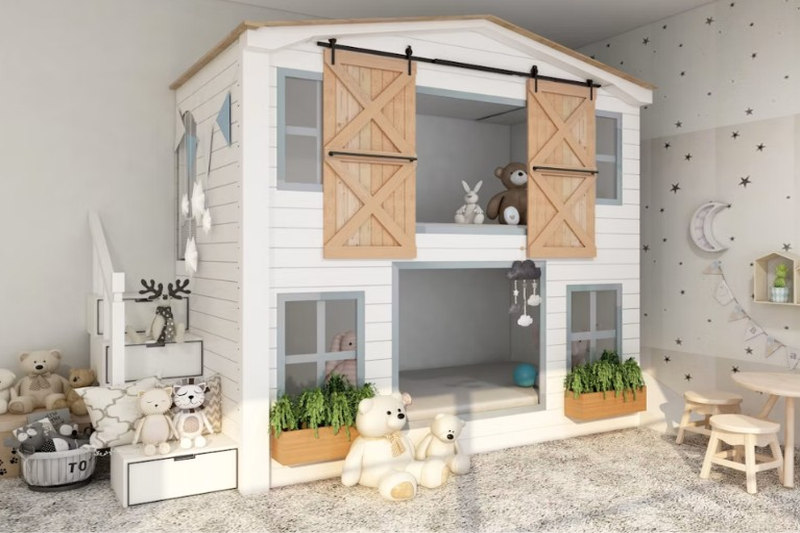
Being a parent means living with the beautiful chaos that children add to our homes. It starts with their favourite toys getting left in random places, but one day, you wake up and realise that they’ve clearly taken over your living spaces. Have a look around and you’ll see toys and building blocks all over the floor, dozens of plushies and blankets piled on the sofa, and their books and knick knacks crammed into your carefully curated book shelves and display cases. If you’re like most parents, it’s also likely that your living room has started to resemble a soft play centre as there’s a foam mat on the floor, and maybe a tiny slide or a trampoline in the corner. Suddenly, you begin to wonder if you should just adapt to the takeover, or start reclaiming your space so you can use the room for its original purpose.
According to Emma Deterding, founder of an interior design company based in London, one of the biggest challenges for people who share spaces with kids is “striking the right balance between creating a practical play space for children while maintaining a cohesive living area for the whole family.” To turn your home into a fun yet sophisticated-looking space, here are some ways to create chic play areas that seamlessly blend into your living room, kitchen, or home office.
Start with a Neutral Palette
Not quite sure if a neutral colour scheme is right for you? There has been so much discourse about the ‘Beige Mom’ aesthetic, with many critics saying that relying on a grey, beige, cream, or white colour palette may limit early visual and cognitive stimulation in children. However, experts say that decorating with muted tones won’t have a negative impact on a child’s development or overall wellbeing. “There is no way in which this is going to harm a kid, no way, because the kid sees all kinds of colour outside, organically,” says Dr. Roberta Golinkoff, a professor of Education, Psychology, and Linguistics at the University of Delaware.
There’s also a reason why interior designers recommend a neutral colour motif for shared spaces since it creates a clean and put-together vibe. But the bonus is it’s also versatile enough that you can change the look and feel of your home by adding a few accessories and pops of colour here and there. It’s the perfect choice for an environment with growing kids since this palette will adapt to their changing colour and aesthetic preferences as the years go by.
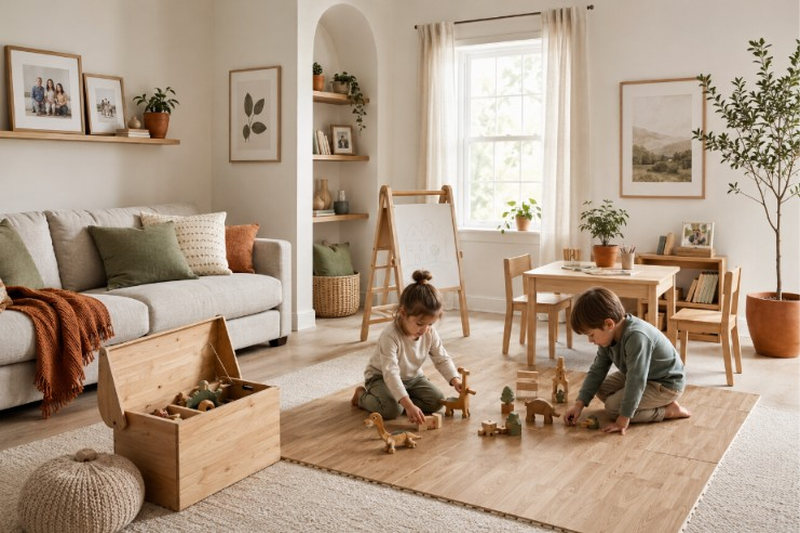
To give your abode a cohesive look, use the same neutral colours in shared rooms, then add earth tones like sage green, terracotta, ocher, sienna, and chocolate brown with accessories and decorative items. Think cushions and soft furnishings in warm colours, wooden poster size frames to display artwork and family pictures, and natural terracotta pots for indoor plants. Avoid using primary coloured plastics and choose toy chests, a small table and chairs, and easels made of natural wood. Also, replace the colourful interlocking foam mats with ones that have a wood grain texture. This provides your children with a soft surface for playing while adding a refined, wood-floor look to your home.
Make Use of Wasted Space
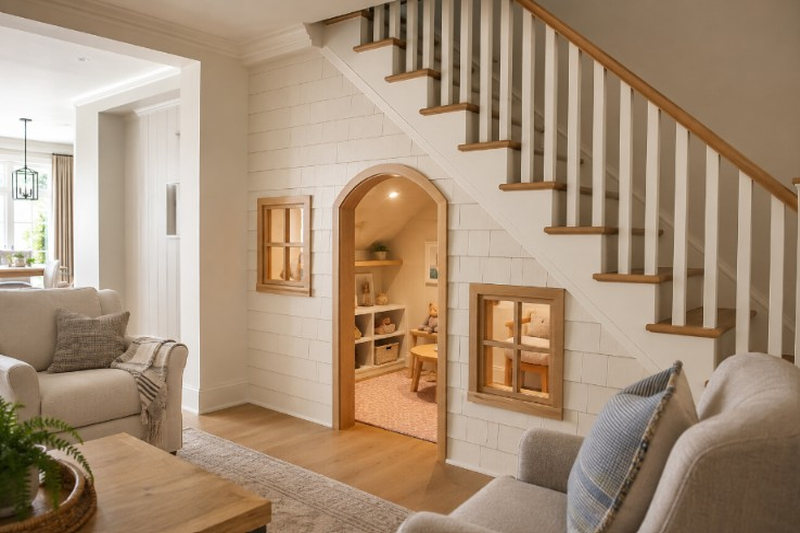
A big plastic playhouse can take up a lot of floor space in the living room or kitchen, blocking sightlines and making the room look and feel cramped. If your children want a playhouse, look around and see if you can find unused space that can be turned into a mini home. That little nook under your stairs, for instance, can be turned into an epic playhouse, so use your DIY skills to create a tiny abode.
Use cedar shingles in the same colour as your walls so the playhouse naturally blends in with your living spaces, then add trim in a warm hue. Build shelves and storage inside the playhouse so it stays neat and clutter-free, and don’t forget to add cushy chairs to make it comfortable for littles and grown-ups.
Make Room In Your Office
Does your child love to play in your home office while you’re working? Add a play space to get all your work done while keeping an eye on your little one. Define the space with a patterned, non-slip, washable rug, then set up a canvas teepee so your child has a warm and secure place that they can use for playing, resting, or reading. Provide them with a cabinet or cubbies to keep their toys, art supplies, and books neatly contained.
Create cool and inviting play spaces that don’t clash with your decor. Try these tips for fun and sophisticated-looking play areas that you and your kids will enjoy for many years.