
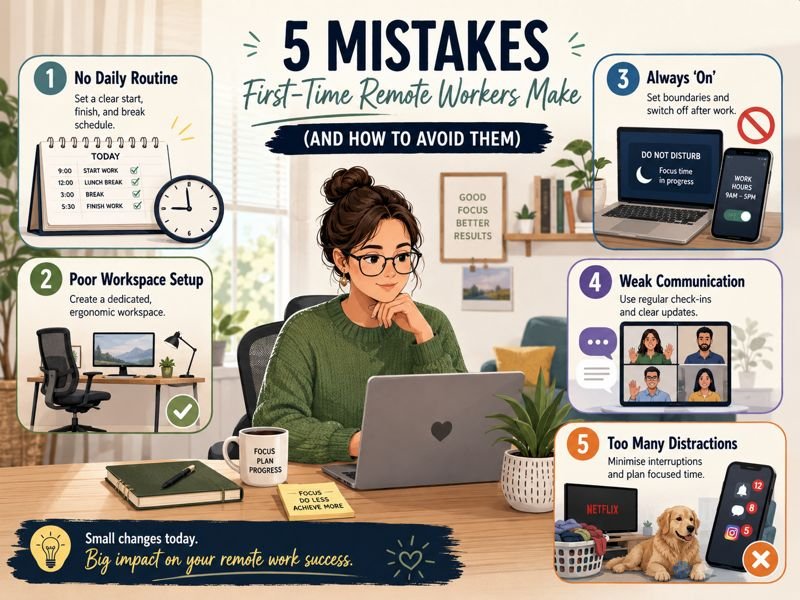
You’ve finally traded the frustrating commute for the freedom to work in sweatpants. No more fluorescent office lighting or missing school pick-up by five minutes. Remote work, on paper, sounds like a dream, especially when you have a family to think about.
However, freedom without structure will lead to burnout, missed deadlines, and reduced productivity. Three months in, you might find yourself answering emails at 11 PM or working from a coffee shop with questionable Wi-Fi.
1. No Dedicated Workspace
Working from the couch one day and the kitchen island the next feels great until your back starts aching. You’ll find that without a consistent spot, it’s hard to get into a daily rhythm.
The couch becomes both a relaxation zone and a stress zone, which blurs the line between work and play. It’s even harder with children around. When your ‘office’ is the same place they do homework, watch telly, and spill cereal, it’s difficult for anyone to understand that you’re actually at work.
Fix it: You don’t have to use a full office, but you do need a consistent location where work happens. Make use of a desk lamp you turn on only during work hours, a folding screen, or a specific table. And invest in an ergonomic setup.
2. Poor Cybersecurity

Cafes are an attractive place to work — the hum, the espresso, the social vibe. But public Wi-Fi is a playground for cybercriminals. When you connect to unsecured networks, you’re broadcasting your activity to anyone with the right tools.
Fix it: Never use free public Wi-Fi without protection. A VPN encrypts your data while you’re online. If you’re handling sensitive information, skip the cafe entirely. At home, secure your router by updating firmware, using WPA2 or WPA3 encryption, and setting up a separate guest network. Many services offer a VPN trial so you can test one before committing.
Also, enable two-factor authentication on every work account and use a password manager.
3. Blurred Work Hours
The line between on and off vanishes when your office is also your living room. For example, you tell yourself you’ll answer one Slack message while the dinner’s cooking. Next thing you know, you’re back at your desk at 10 PM. Note that around 40% of remote workers struggle to fully switch off after hours.
Fix it: You’ll want to set a time during the day when you stop any work-related activity. Consider using “Do Not Disturb” functionality where it’s available. Before logging off, jot down the first task for tomorrow so your brain can park unfinished work.
4. Social Isolation
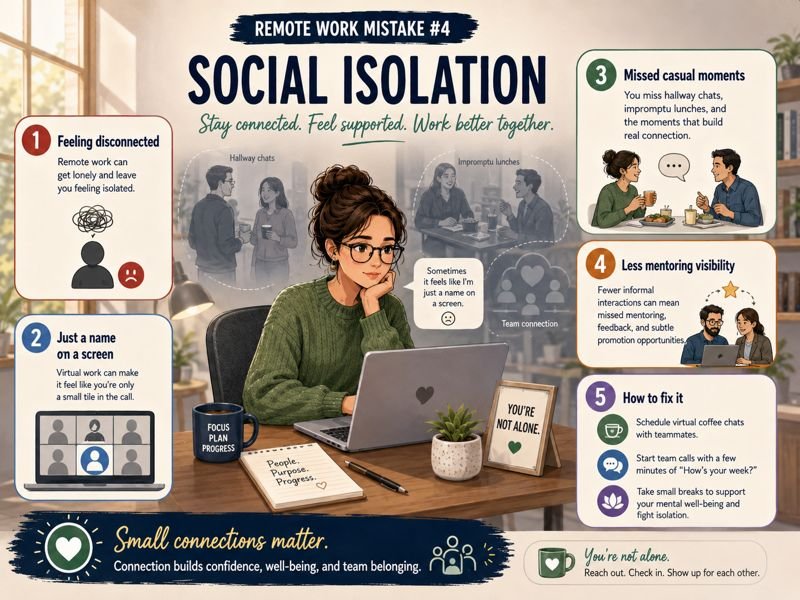
Remote work can get lonely. It’s not uncommon to start feeling like a name on a screen without hallway chats or impromptu lunches. You can miss out on mentoring opportunities and the subtle dynamics that shape who gets promoted.
Fix it: Schedule virtual coffee chats with colleagues. Start team calls with a few minutes of ‘how’s your week?’ before getting into the agenda. Even small breaks can improve mental well-being and combat isolation.
5. Neglecting Your Internet Connection
You’d never present from a laptop with a cracked screen. So why tolerate an internet connection that freezes mid-sentence? Also, choppy video calls make you look unprepared, and slow uploads delay client deliverables.
Fix it: Aim for 100 Mbps download and 5–10 Mbps upload for regular video calls. Try to place your router centrally and elevate it. You’ll want to use the 5 GHz band for meetings and the 2.4 GHz band for devices farther away.
For critical calls, plug in directly with an Ethernet cable. That’s the most reliable way to avoid moments where the connection looks unprofessional.
Make Remote Work Actually Work
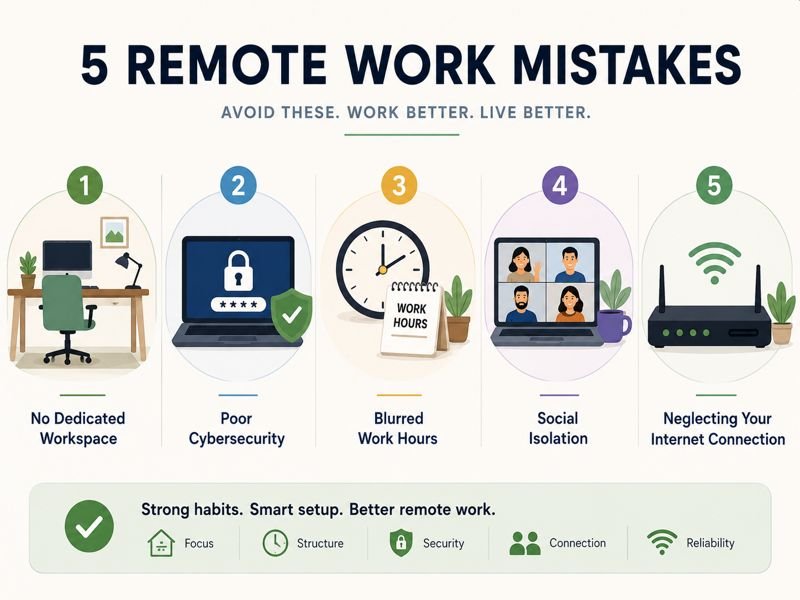
Remote work offers freedom, but you won’t get far without structure. A dedicated workspace protects your focus and your body while clear work hours prevent burnout. Strong cybersecurity keeps your data and reputation safe. Intentional connection with your team fights isolation and keeps you visible, and a reliable internet connection should not be an afterthought.
Nail these five remote work challenges, and you’ll set yourself up to succeed in any role. You made the leap for a better way to work, so build the systems that let you actually enjoy it.